

01 / Start here
A glacier mountain, not an ordinary hike.
Hvannadalshnúkur is Iceland’s highest peak, on Öræfajökull beneath the Vatnajökull ice cap. The Sandfell approach is long and crosses glacier terrain. The national park recommends travelling on the glacier with experienced mountain guides. National Park advice.


02 / Sandfell route
Start with the guide and current conditions.
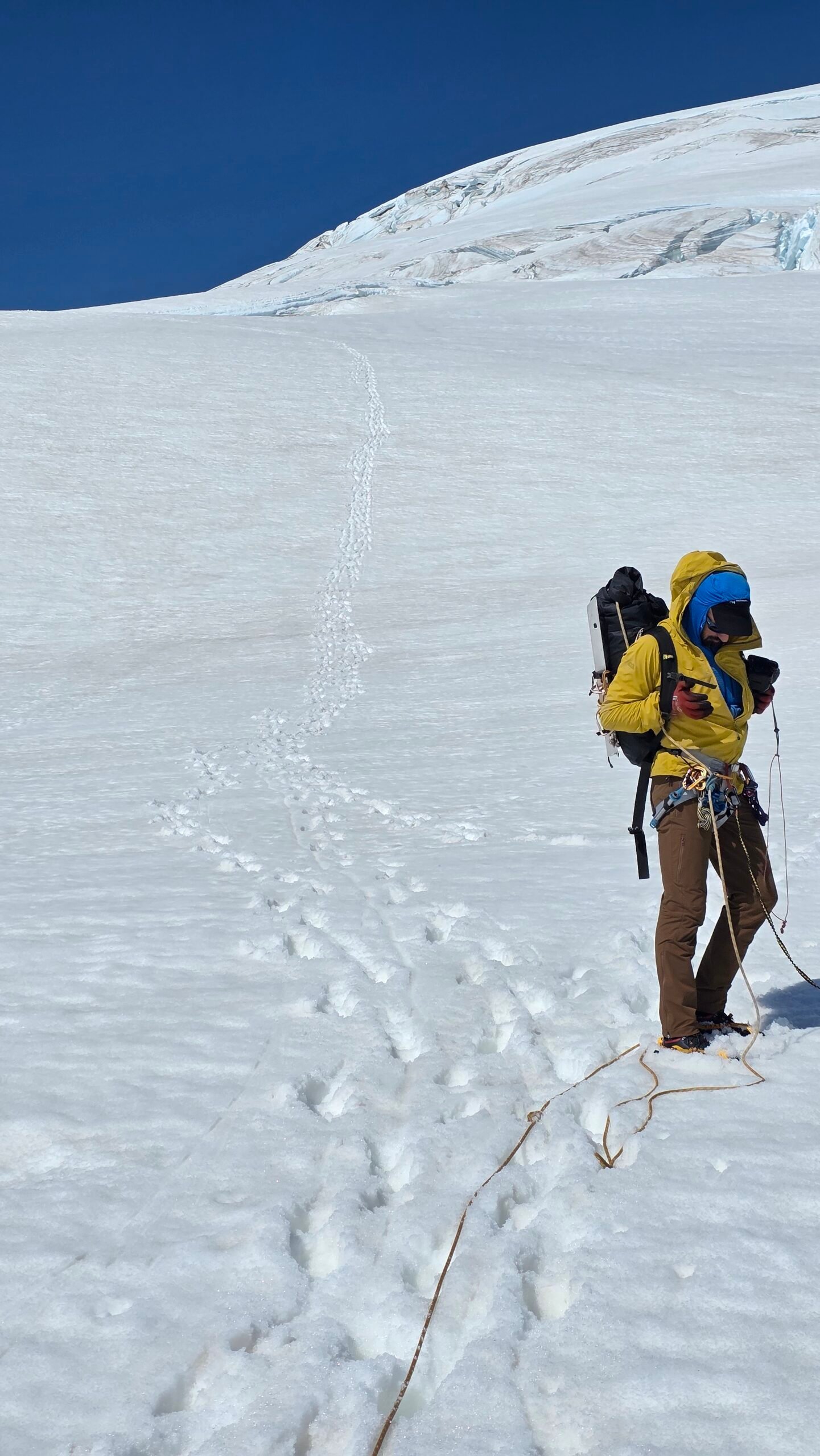
Sandfell is one of the main starting points for the mountain. The approach climbs from the lowlands toward the ice and a glacier route to the summit, then returns. Crevasses, snow and weather change the actual line; do not follow a downloaded track as a safe route. Sandfell information.

03 / Summit and elevation
Why the published heights differ.
My original expedition record uses 2,110 m. Visit Iceland lists 2,119 m, while other published references use approximately 2,110 m. Sources differ, so this guide preserves the figure in my diary without presenting the discrepancy as settled. Visit Iceland.
04 / Glacier safety
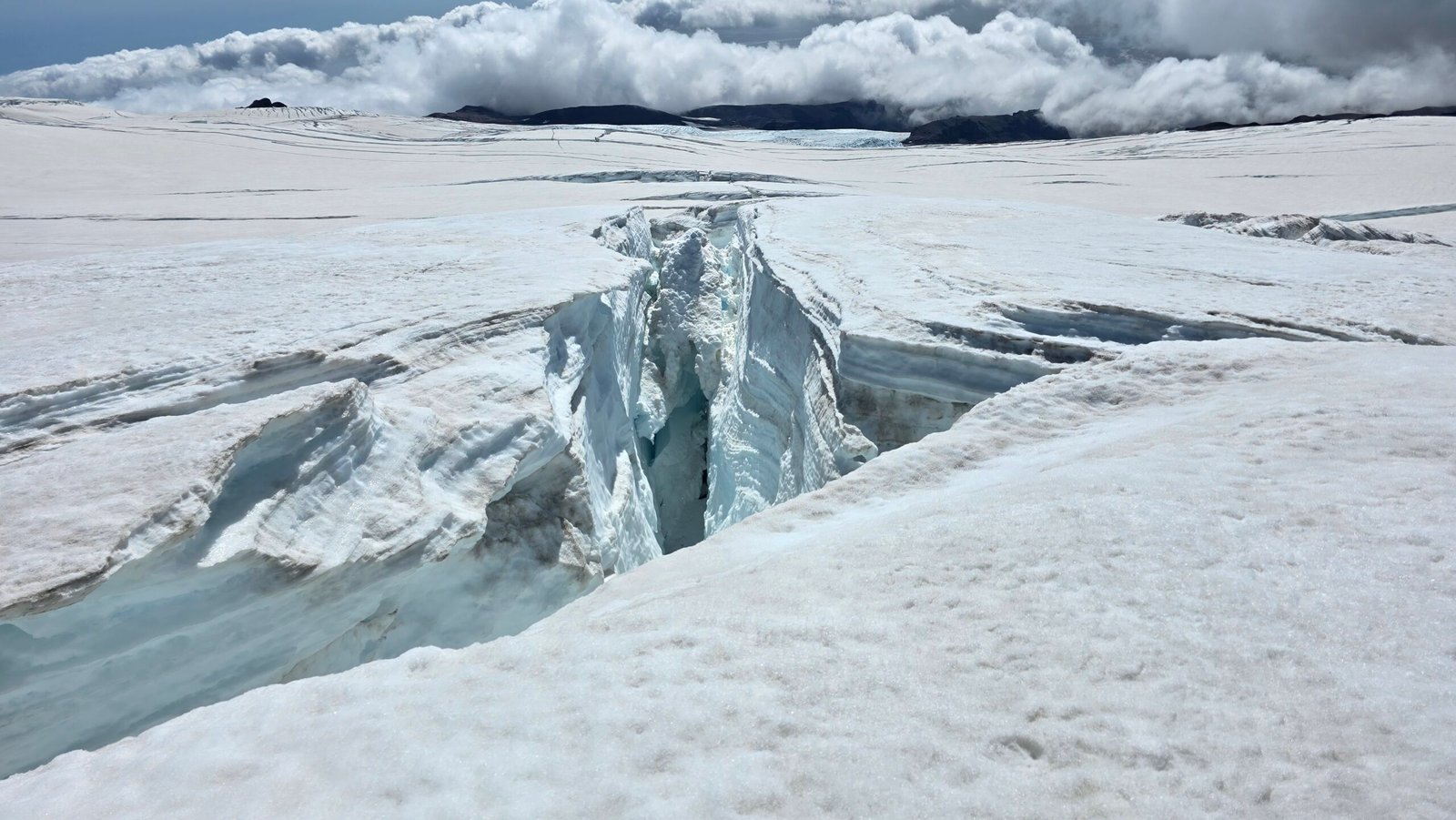
Crevasses can be hidden.
Snow bridges may conceal deep crevasses even on a seemingly smooth glacier. Safetravel recommends an experienced certified glacier guide and warns that crevasses can form with limited warning. A crevasse map is useful context, not proof of a safe crossing. Safetravel glacier advice.

05 / Safety
Travel with the skills for the terrain.
Book a qualified glacier guide unless your entire team has appropriate glacier travel, roped movement and crevasse-rescue experience, equipment and current local knowledge. Even experienced parties must assess weather and conditions and be prepared to turn back.
06 / Choosing a guide
Ask what the trip includes.
Confirm guide qualifications, group size, required fitness, meeting point, equipment, cancellation terms and weather policy. Ask how the operator assesses conditions and what alternatives exist if the climb cannot go ahead.
07 / Time on the mountain
Allow a full and demanding day.
Times vary with conditions, group pace, route and breaks. My own 2025 outing ran from approximately 04:00 to 17:00. It is a personal record, not a promise or a safe timing estimate for another party.
08 / Changing terrain
Expect a long approach and glacier travel.
The day may include steep ground, snow, ice and an exposed upper mountain. Guide decisions depend on the current surface, crevasses and the group. Fitness and crampon skills need to match the conditions.
09 / Weather
Watch the forecast close to departure.
Wind, low cloud, precipitation and cold can make navigation and glacier travel dangerous. Check the Icelandic Met Office and follow your guide’s assessment; conditions on the mountain may be much harsher than at the car park. Icelandic Met Office.
10 / Season
The calendar does not guarantee conditions.
Guided trips depend on snow, crevasses, daylight and operator availability. Ask local guides about the current season and retain a spare weather day. A clear summer forecast does not remove glacier hazards.
11 / Avalanches and snow
Assess the snowpack with local expertise.
Avalanches are possible when snow conditions and terrain combine unfavourably. Check current warnings and seek qualified local judgement. Avalanche equipment is useful only with the training and group plan to use it. Safetravel avalanche advice.
12 / Volcanic setting
Ice covers an active volcanic landscape.
The peak belongs to Öræfajökull, a central volcano beneath ice at the southern edge of Vatnajökull. Check current official warnings and closures before travel, and follow instructions from the authorities and your guide. Visit Iceland geography.
13 / Equipment
Confirm the list with your guide.
Waterproof clothing, warm layers, gloves, food, water and suitable boots are essential. The guide will specify technical gear such as harness, helmet, crampons, ice axe and rope. Fit and correct use matter; do not improvise glacier techniques.
14 / Fitness
Prepare for sustained movement.
Train for a long ascent and descent with a pack, and be honest with the operator about health, injuries and previous mountain experience. The guide can help assess whether the trip is suitable.
15 / Health and recovery
A summit is never worth ignoring an injury.
My climb followed a period of knee pain and rest. Recovery varies for each person: discuss ongoing symptoms with a qualified clinician and the guide, and postpone if you cannot safely complete the ascent and descent.
17 / Getting there
Travel along the south coast.
Sandfell is in Öræfi in southeast Iceland. Confirm the exact meeting point with your guide and allow time for road conditions. My 375 km drive from Reykjavík was part of my journey, not a current driving-time estimate. Road conditions.
18 / Road conditions
Check before both journeys.
Wind, snow, ice and closures can affect Icelandic roads. Check the official road service and weather warnings, choose a suitable vehicle and avoid driving fatigued after a long climb. Current road information.
19 / Where to stay
Rest near the meeting point.
Skaftafell and the wider Öræfi area can be useful bases, subject to availability and the guide’s meeting location. Book ahead where appropriate and check camping and overnight parking rules; my car night is not a recommendation to camp outside permitted areas.
20 / Food and water
Bring a reserve.
Ask your guide how much food and water to carry for the expected conditions. Pack food you can eat with cold hands and enough for delays; check whether the guide provides anything before leaving.
21 / Emergency
Agree on the response before departure.
In Iceland call 112 in an emergency, share your location and follow the dispatcher. A glacier rescue is specialised and weather dependent; a team must be able to respond immediately to a crevasse incident rather than relying solely on external rescue.
22 / National park
Follow local access rules.
Check Vatnajökull National Park information for closures, parking and current visitor rules. Protect vegetation on the approach, use permitted paths and take all waste away. National Park.
23 / Alternatives
Enjoy Skaftafell without a summit attempt.
If weather or experience rules out the climb, ask park staff about suitable lower-level trails and current closures. A glacier viewpoint is different from stepping onto ice; never enter a glacier without the necessary expertise and equipment.
24 / Itinerary
Build in a weather window.
Travel to the area and rest, check the forecast with your guide, and allow a full day for the ascent. Add a spare day where possible. Plan the return drive only after allowing for fatigue and possible delays.
25 / Costs
Budget in Icelandic króna.
Include flights, vehicle, fuel, accommodation, food, guiding, equipment and insurance. Enter current quotes in ISK below; the calculator is not a live price feed.
28 / Saved checklist
Prepare for a long glacier ascent.
Saved only in this browser. This is a crevassed glacier ascent. Go with a qualified glacier guide unless your team has the equipment, experience and rescue skills to travel independently.
29 / Cost calculator
Use your own quotes.
Plan in Icelandic króna.
Enter your own current prices in ISK. Vehicle and main travel are shared; the other amounts are per person. Include any park, guide and transfer quotes under the appropriate fields. Blank entries count as zero.
My story, FAQ & sources
Back on my feet above the ice.
After knee pain on Großglockner interrupted my plans, I rested and travelled to Iceland. On 22 July 2025 I flew from Milan to Reykjavík, rented a car and drove to Sandfell. I spent the night in the car beneath the mountain.

At 04:00 on 23 July I began with Matteo, an Italian guide based in Iceland. We travelled roped across the glacier, navigating around crevasses in clear, cold weather. The absence of knee pain gave me hope that I could continue the journey.

At 11:36 we reached the summit, with mountains and ice stretching toward the Atlantic. We took photographs, then descended carefully and returned to the parking area around 17:00. For me the climb was a reminder that recovery is part of endurance.

Frequently asked questions
What is Iceland’s highest mountain?
Hvannadalshnúkur on Öræfajökull is Iceland’s highest peak.
How high is it?
My diary uses 2,110 m; Visit Iceland lists 2,119 m. Published figures differ.
Can beginners climb it?
It is a demanding long glacier ascent. Ask a qualified guide whether your fitness and experience are appropriate.
Do I need a guide?
The national park says the safest way onto the glacier is with experienced mountain guides; independent parties need full glacier and crevasse-rescue skills.
Are there crevasses?
Yes. Crevasses can be hidden beneath snow and can change; a map does not eliminate the risk.
Where does the Sandfell route start?
Sandfell in Öræfi is one of the main starting points. Confirm your precise meeting point with the guide.
How long does the climb take?
Conditions and groups vary. My own day was approximately 13 hours, which should not be treated as a standard time.
Can I climb without crampons?
Ask your guide for the current equipment list. Crampons and other glacier equipment are normally required for this terrain.
Is the mountain a volcano?
The peak is on Öræfajökull, a central volcano covered by glacier ice.
Can the trip be cancelled?
Yes. Guides may postpone or cancel for unsafe conditions; review terms before booking.
What weather should I expect?
Weather can change rapidly and the glacier can be colder and windier than the lowlands.
What is the emergency number?
Call 112 in Iceland and follow instructions.
When did Adrian climb?
On 23 July 2025 with a glacier guide.
What currency does the calculator use?
Icelandic króna, using your own current quotes.
Sources and current information
Research checked 2 November 2026. Conditions, access and prices can change.
- Vatnajökull National Park: Sandfell ↗ — Approach and glacier guide advice
- Safetravel: glacier safety and crevasse maps ↗ — Crevasse risks and guidance
- Icelandic Met Office ↗ — Forecasts and warnings
- Icelandic road conditions ↗ — Current roads
- Visit Iceland: Iceland in numbers ↗ — Published elevation figure
- Vatnajökull National Park ↗ — Park information
- Safetravel: avalanche safety ↗ — Snow safety
- Visit Iceland: Vatnajökull ↗ — Glacier and volcano geography