Austria — Großglockner (3,798 m): Fear, Pain, and the Hardest Summit
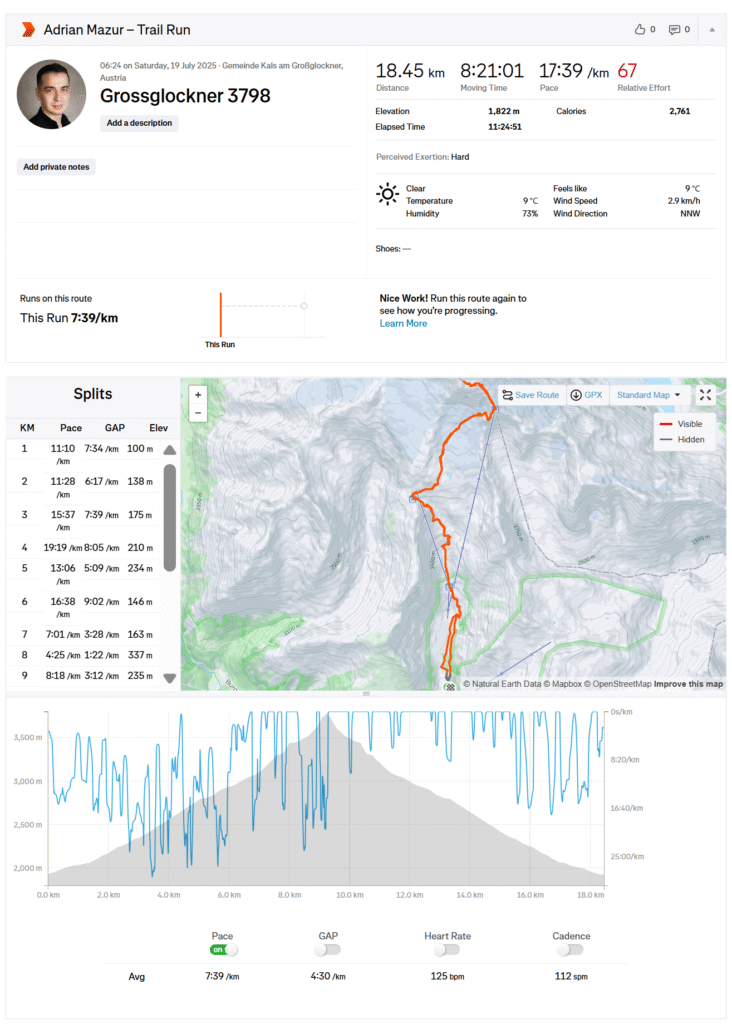
Date: 19 July 2025 Altitude: 3,798 m
Coordinates: 47.074° N, 12.693° E
Route: Standard route via Erzherzog-Johann-Hütte (Adlersruhe)
Transport to region: 193 km drive from Krma Valley (Slovenia) to Kals am Großglockner (Austria)
Accommodation: Tent at Nationalpark Camping Großglockner
Conditions: Cold and cloudy morning, clearing to bright skies on the summit
🧭 Overview
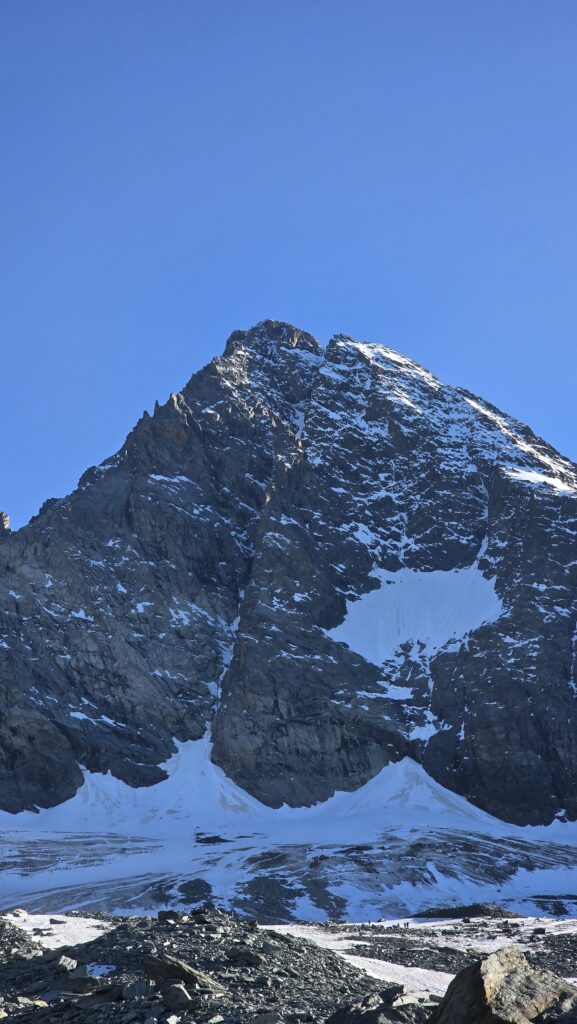
Großglockner, Austria’s highest mountain, rises sharply above the Hohe Tauern National Park, a true Alpine giant with steep ridges, crevassed glaciers, and technical exposure. After the clean perfection of Triglav, this climb turned into something entirely different — a fight against fear, pain, and fatigue.
🏕️ The Approach
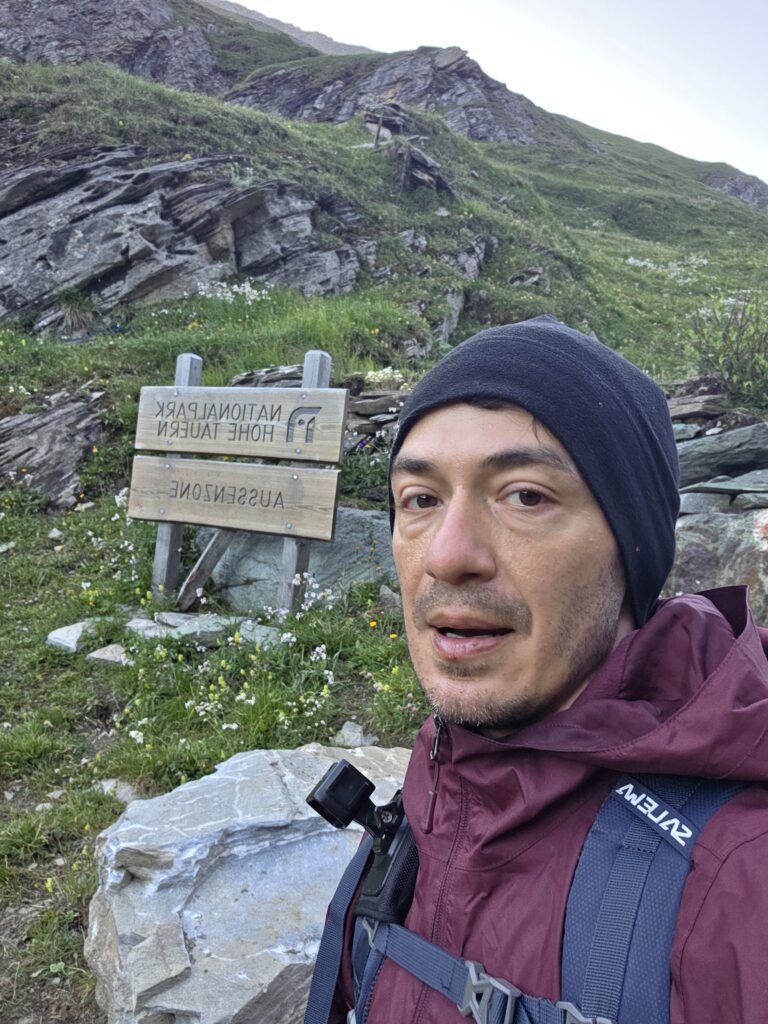
We drove north from Slovenia after the Triglav climb, arriving in Kals am Großglockner late in the evening. I pitched my small tent at Nationalpark Camping Großglockner, surrounded by the hum of wind and cowbells echoing from the valley walls. Sleep came in short bursts, the kind of restless anticipation that only serious climbs bring.
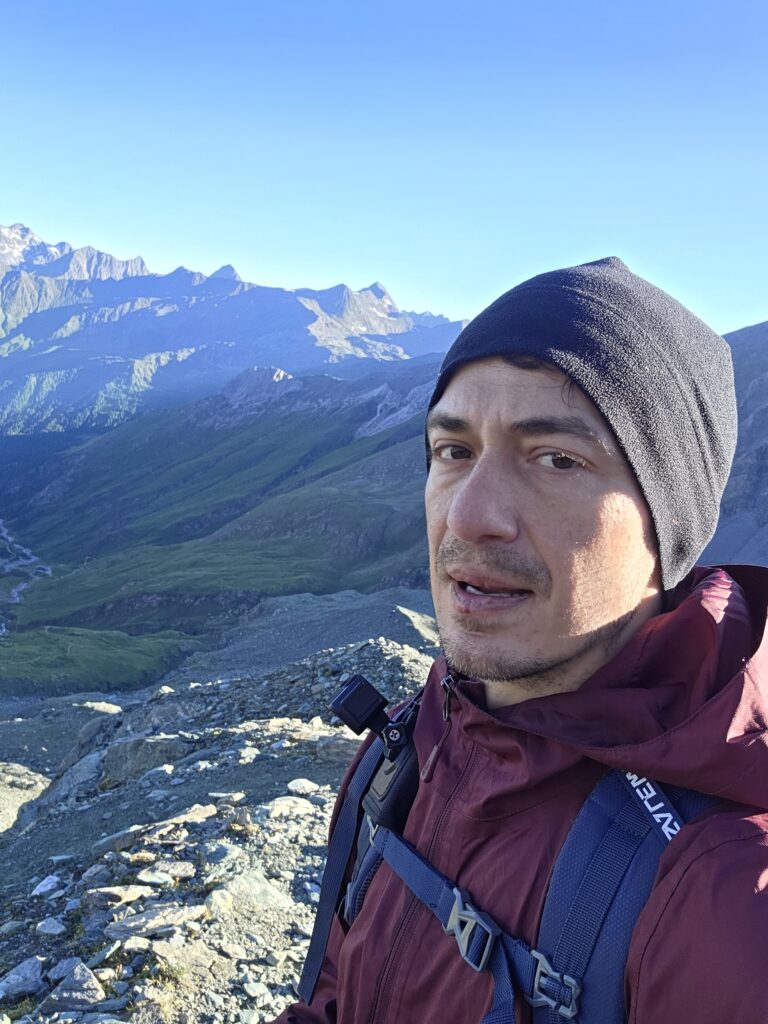
At 05:24 a.m., I left the parking area and began the ascent. The air was cold and misty, the light barely breaking through clouds. My legs were still heavy from Triglav, but I felt determined. By the time I reached the Erzherzog-Johann-Hütte (Adlersruhe, 3,454 m) around 10:20, the clouds had started to open.
After a short twenty-minute rest, I packed my gear again and moved toward the final section — a steep, mixed ridge of snow, ice, and rock.
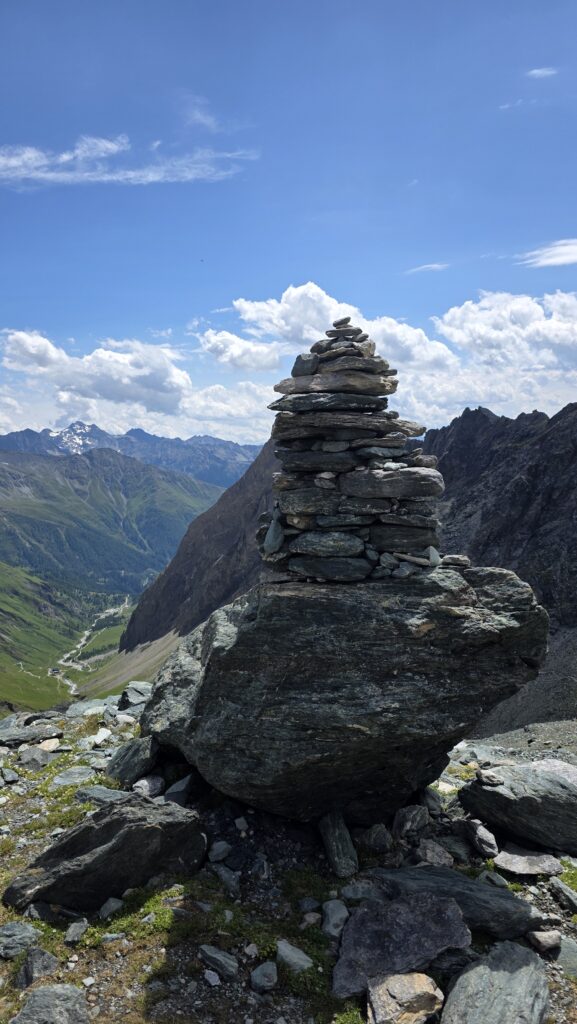
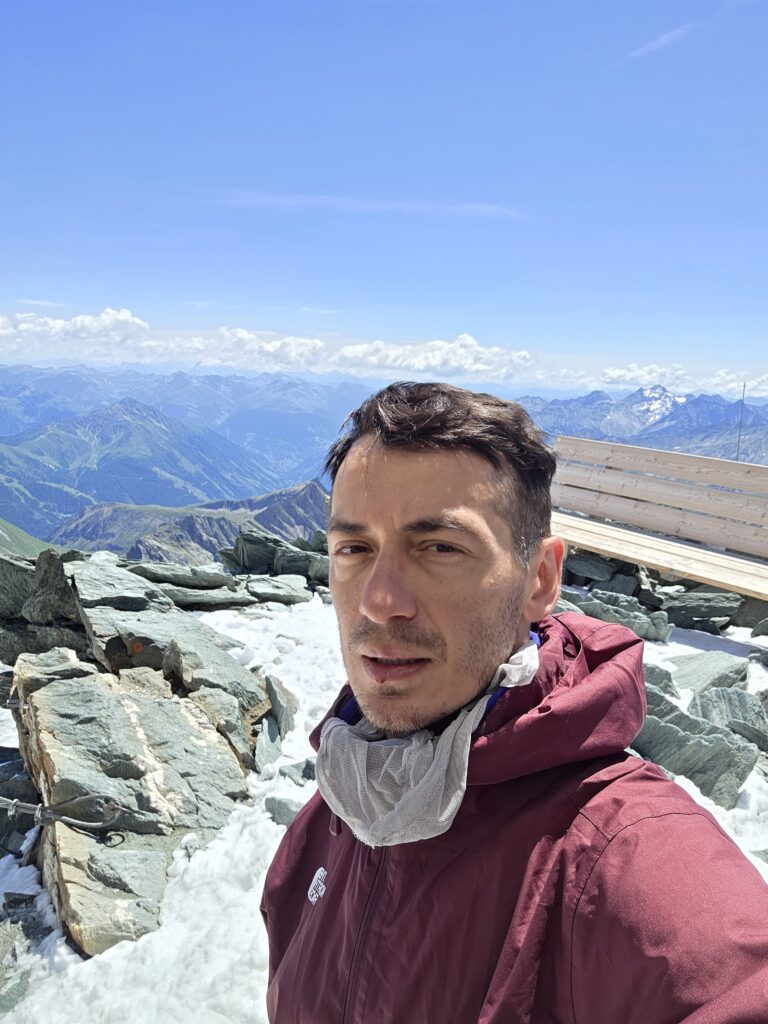
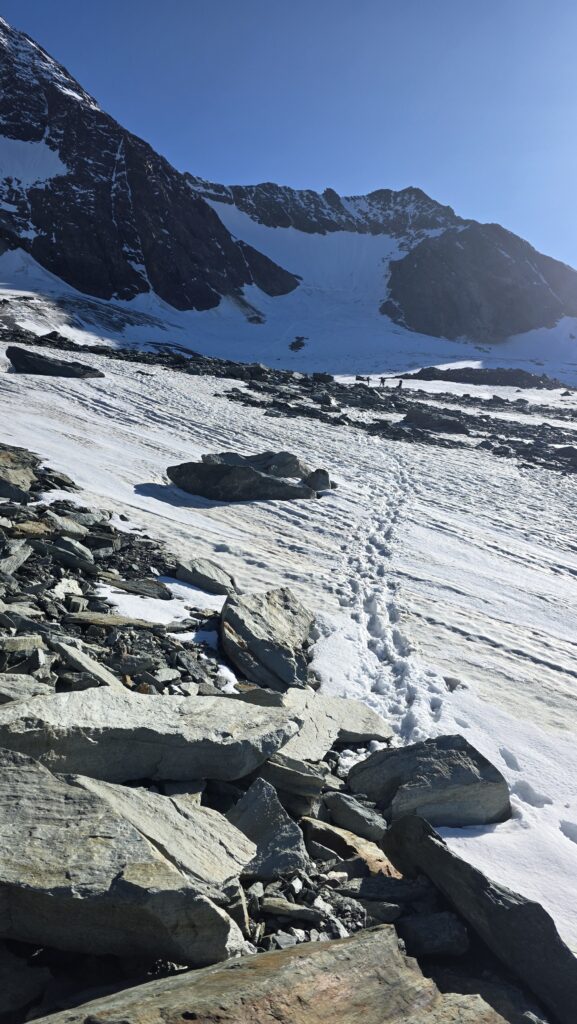
🧗 The Climb
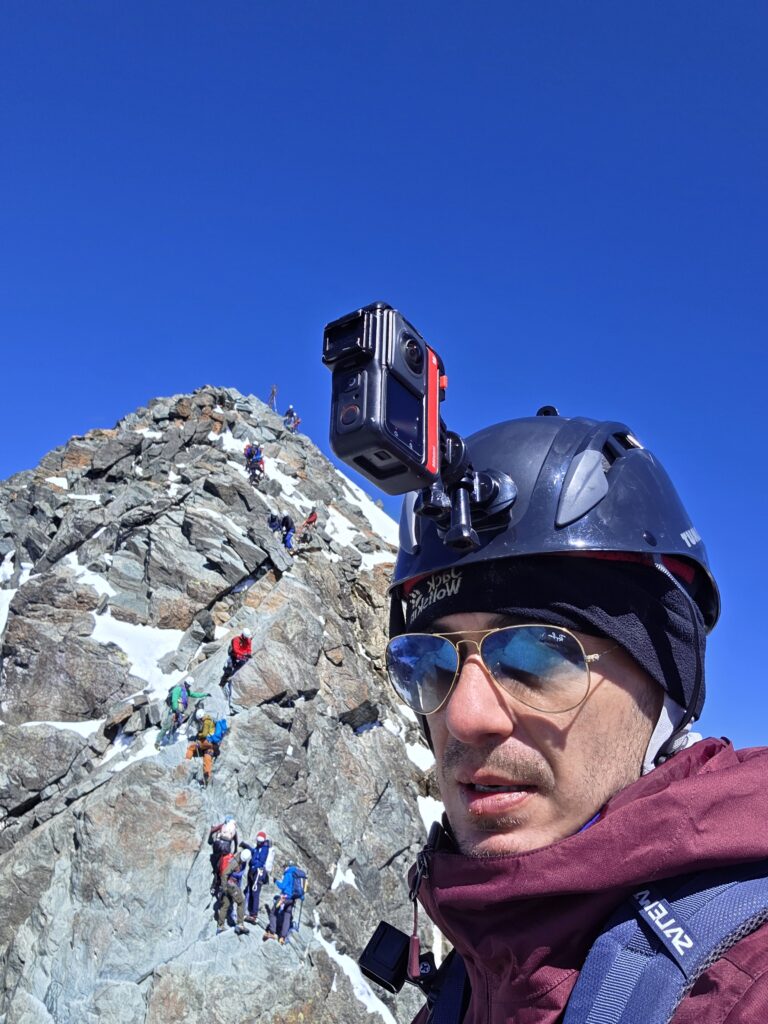
What followed was the most technically demanding part of the entire Crown of Europe project so far. The rock was wet, the route crowded, and progress painfully slow. Dozens of roped climbers moved cautiously through narrow passages, their carabiners clicking in rhythm. I was solo, unroped, every move deliberate, every slip unthinkable.
Halfway up, my knee pain, which had started as mild discomfort that morning, suddenly flared. Each step upward felt like a knife. But turning back in that terrain was no easier. I forced myself to continue, focusing only on the next metre of rock, the next hold, the next breath.
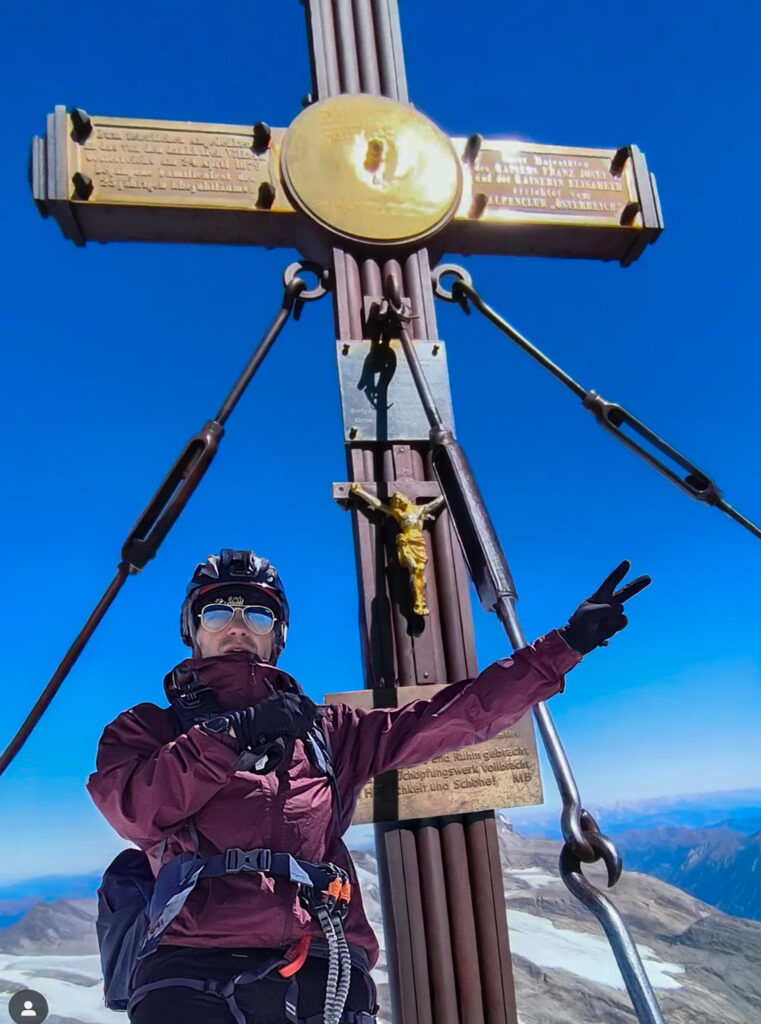
Around 12:30 p.m., I finally stepped onto the summit, exhausted, shaking, and honestly, terrified.
The views were incredible: glaciers below, endless peaks stretching across Austria. But I stayed just a few minutes, long enough for a single photo and a deep exhale. There was no celebration, only relief.
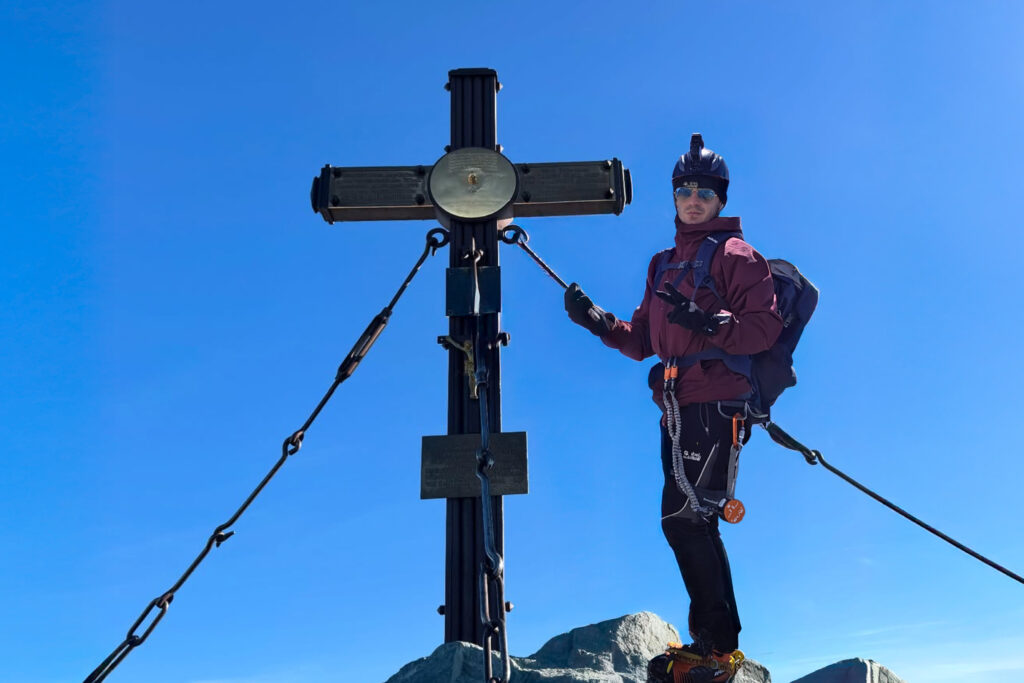
🧩 The Descent
Descending was worse. My knee deteriorated quickly, and the ridge was still slick from melting snow. Crowds of climbers slowed every move. I used my ice axe for stability, gritting my teeth through every jolt of pain.
I passed back through the Erzherzog-Johann-Hütte just after 1 p.m., not stopping to rest, I simply wanted to be safe again. The trail seemed endless, and by the time I reached the valley floor around 5:50 p.m., I was completely destroyed physically and mentally.
Großglockner broke the rhythm of perfection. It reminded me that even with training, experience, and preparation, the mountains still hold the power to humble.
💬 Reflection
It was the first time I truly questioned my decision to climb alone.
Großglockner demanded everything: balance, courage, and pain tolerance, and it gave back both fear and gratitude in equal measure.
Climbing it solo, in those wet and crowded conditions, was a mistake, but one I’ll never forget. I learned that strength isn’t just the ability to keep going, but knowing why you’re going at all.