
01 / Start here
High lakes.
A whole Balkan horizon.
Musala is more than Bulgaria’s highest summit. It is a journey from pine forest to open mountain country, past still water and granite, into the highest landscape in the Balkans.
Come for the summit, but leave time for the route. The lower walking gives you room to find your rhythm; the lakes change the scale; the upper ground asks for attention. In good snow-free conditions, the usual approach from Yastrebets is a hiking objective for well-prepared walkers. The season, weather and return plan still decide whether it is the right day.
- Mountain
- Musala · МусалаBulgaria and the Balkan Peninsula’s high point
- Elevation
- 2,925 mThe commonly used summit figure
- Range & park
- Rila MountainsRila National Park
- Usual resort base
- BorovetsWith access via Samokov
- Popular approach
- Yastrebets gondolaThen Musala Hut, the high shelter and summit
- My recorded walk
- 14.12 km · +723 mSeptember 2025; my route, not a universal specification
I reached Musala at 11:03 on 4 September 2025. This guide combines that day’s photographs and diary with the decisions a first-time visitor needs: how to get there, whether to use the gondola, where to stay and how to leave room for the way down. Mountain and observatory reference.
Three things to settle before the summit plan
Actual conditions: a summer photograph cannot tell you whether there is ice today.
Lift operation: check the day, status and last descent, not just general opening hours.
Your margin: allow time for the slowest person, breaks and a change of plan.
02 / Know the mountain
The roof of the Balkans.
And a working mountain.
Musala rises in the Rila Mountains, within Rila National Park. Its usual 2,925 m elevation makes it the highest peak in Bulgaria and the Balkan Peninsula. The summit is also a scientific workplace, with a meteorological station and the Bulgarian Academy of Sciences’ environmental observatory. Read about the Moussala Observatory.
What the height does—and does not—tell you
A summit elevation is not the amount you climb on foot. Starting high via the gondola changes the outing substantially. Conversely, the net difference between the upper lift station and summit omits the undulations in the path. Use the start, finish, actual ascent and walking distance together.
Names worth saving offline
Save Borovets / Боровец, Yastrebets / Ястребец, Musala / Мусала and Ledeno Ezero / Ледено езеро. You may see Musala written as Moussala or Mussala. The high shelter is often referred to as Everest; check the actual location and host when arranging a stay.
The attraction is the whole basin
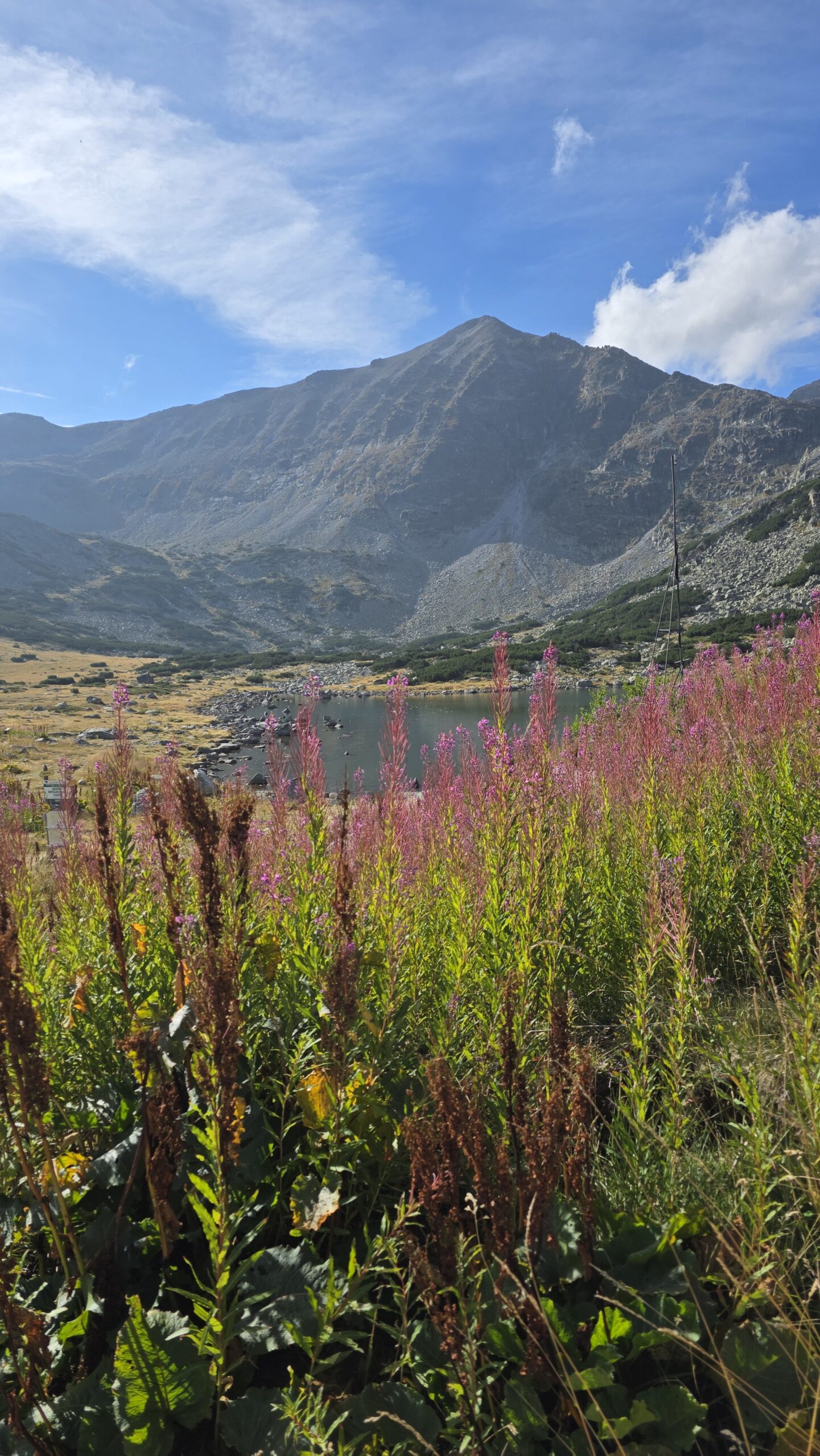
You do not need a panorama of distant countries to make the outing worthwhile. The close landscape—lakes, rocky slopes, paths threading through low vegetation—is enough. A shorter walk chosen for the conditions can still give you an excellent day in Rila.
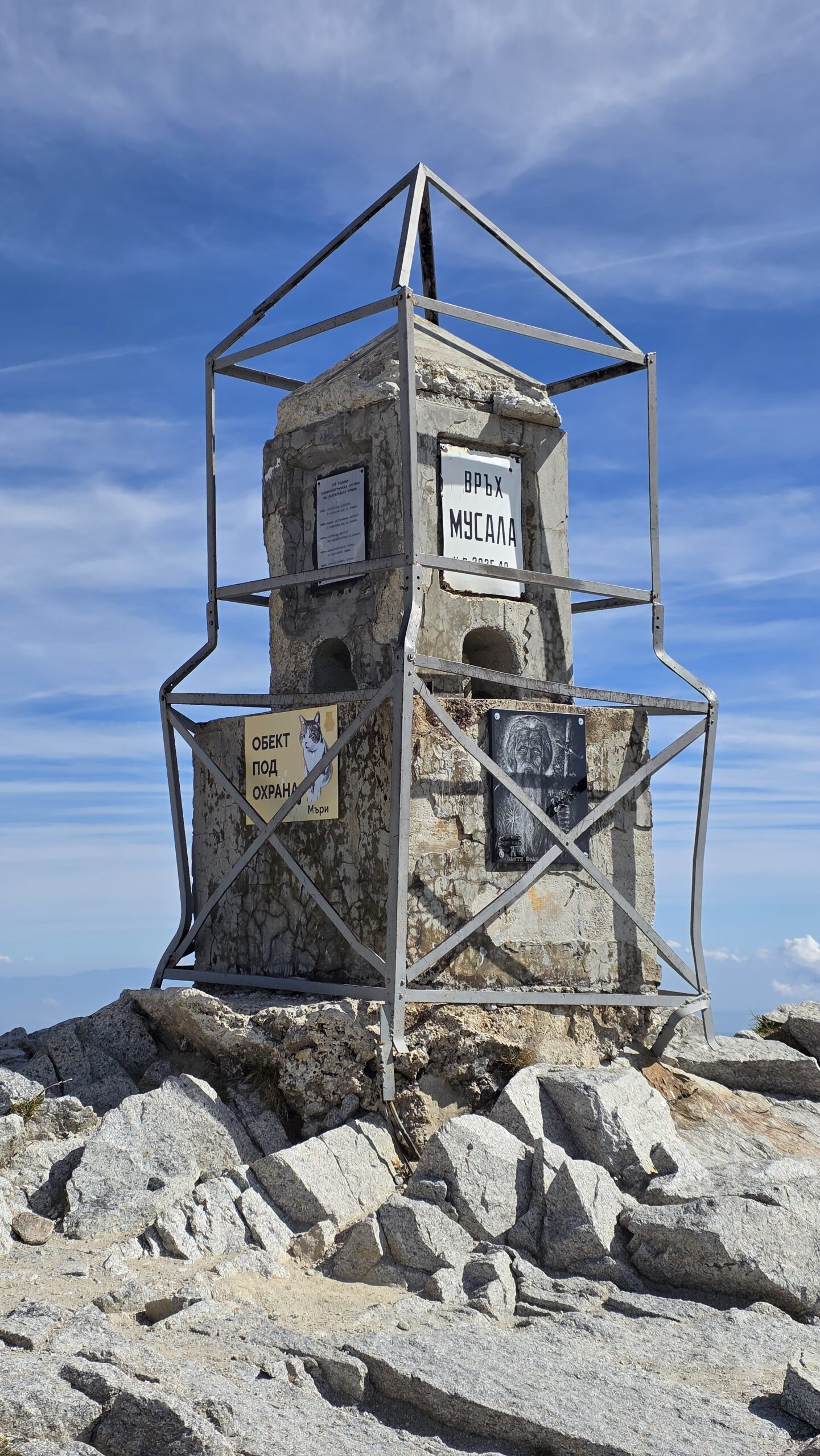
At the summit, respect operational buildings, equipment and any access restrictions. A scientific station is not a public mountain hotel or a guaranteed source of visitor facilities. Take the photograph without blocking the path, then find a considerate place to pause.
03 / Choose your route
The gondola changes
the day you are planning.
| Option | Who it suits | The main planning issue |
|---|---|---|
| Gondola up and down | Prepared hikers seeking the usual high start | Enough time for the complete walk and the final descent |
| Walk from Borovets | Strong walkers who deliberately want a much bigger day | The extra approach, ascent and return; do not improvise it after a late start |
| Overnight at a confirmed mountain hut | Visitors who want to divide the journey | A real reservation, current services and a coherent two-day route |
| Longer hut-to-hut approach | Experienced walkers with a separate itinerary | Navigation, daily stages, conditions and accommodation throughout |
The usual high-start journey
The familiar sequence is upper Yastrebets station → Musala Hut → Ledeno Ezero / Everest shelter → Musala summit, with the return planned back to the gondola. It is useful to understand these stages before looking at a total duration. Borovets approach overview.
A realistic time allowance
Published references vary: the observatory describes roughly three hours or more of walking after the cable car, while BDZ’s visitor overview gives about four hours for the gondola-assisted ascent. These are ascent references, not your total return day. For initial planning, reserve a generous six to eight hours for walking and breaks on a dry, snow-free high-start outing, then adjust to your party and current advice. Add lift rides, queues and transport separately.
That planning allowance is not a maximum, a guarantee or permission to start late. If your expected pace cannot fit the actual operating window with margin, choose a shorter walk or a different arrangement.
Without the gondola
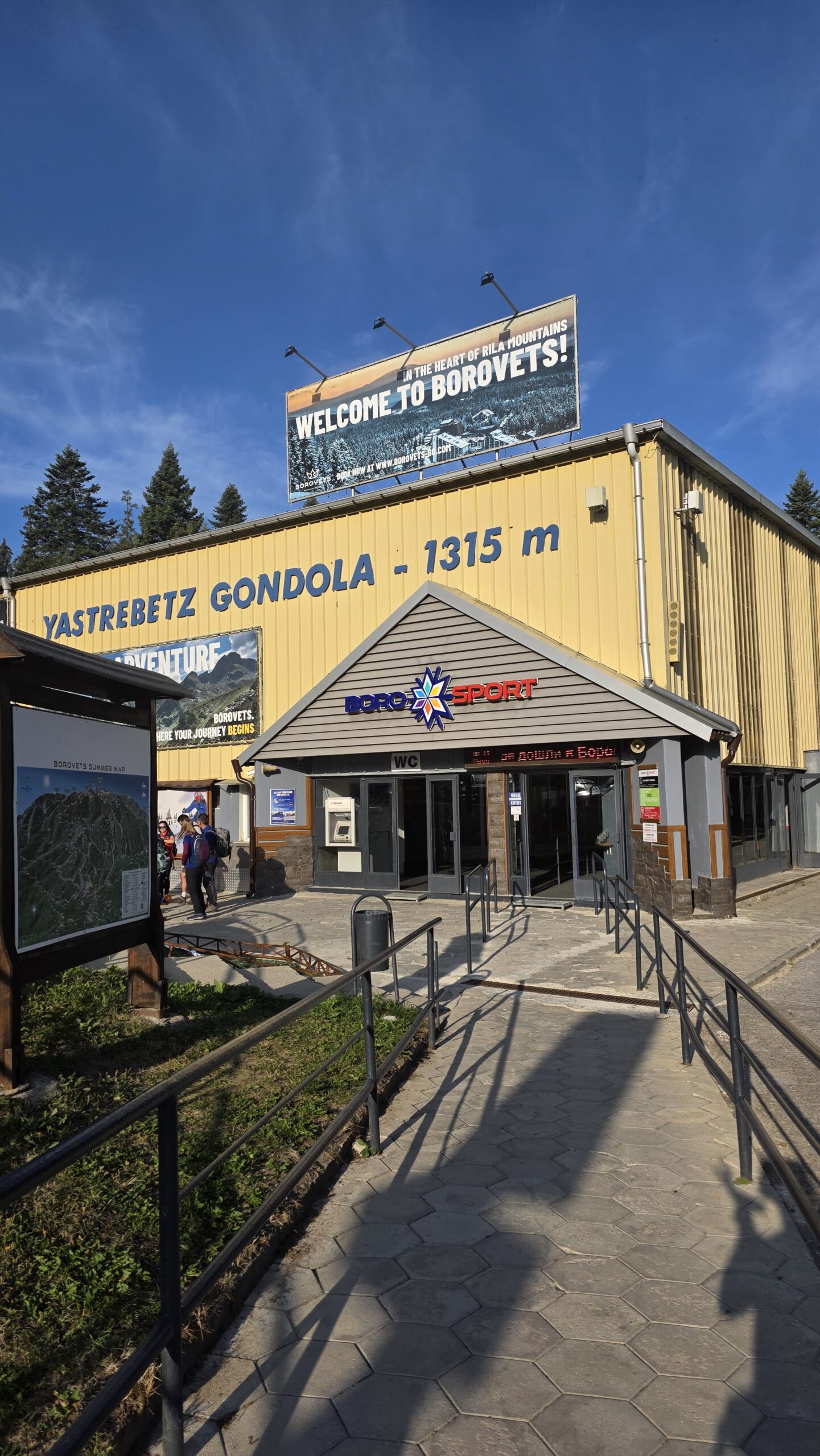
The Borovets lower station is around 1,315 m; the summit is 2,925 m. That already implies about 1,610 m of net height gain before counting route undulations. The full walking route is a distinct undertaking, not a free substitute with the same timetable. BDZ describes the classical Borovets approach as about three hours longer on the ascent. Read the different approaches.
04 / Gondola & return plan
The last ride down
belongs in your morning plan.
Use the operator’s gondola information for the Yastrebets high start. Do not confuse it with the separate Yastrebets Express chairlift, another installation in the resort. Similar names are an easy way to plan around the wrong facility.
Dated status, not a promise for your visit
On 31 October 2026, the official lift-status page stated that all lifts were closed until the winter season. General gondola hours remained visible on the same page. A displayed timetable therefore did not mean the lift was operating that day. Check the live operator status.
Ask four specific questions
- Will the gondola operate on the exact date, including any maintenance or rest days?
- When is the first useful ascent and the final descent from the upper station?
- Are wind, weather or technical issues affecting operation?
- Does your chosen ticket cover the journey you intend to make?
Work backwards before setting off
Start with the confirmed final descent. Subtract your realistic walking time from the summit back to the station, then an additional margin. That produces a latest summit-departure estimate for those inputs; weather, fatigue or route conditions may require turning around earlier.
For example, if the last descent were 18:00, and your planned descent took three hours with an extra hour of margin, you would need to leave the summit by 14:00 at the latest under that plan. This is arithmetic using an example—not the current timetable, and not a judgement that three hours will suit your group.
Missing the gondola is not a minor inconvenience
You may face a long additional descent. Know the lawful walking option and your ability to complete it before leaving, but never make “we can always walk down” a reason to ignore the clock. Confirmed accommodation is another planned option; an unannounced arrival at a closed or full hut is not.
05 / Getting to Borovets
Arrive with time
to start rested.
Borovets is the useful resort base for this approach. Samokov is the nearby transport and service town; Sofia is the natural arrival city for many international visitors. Keep the journey to the resort separate from the mountain outing when comparing itineraries.
Public transport via Samokov
Check the Sofia–Samokov service for your date and departure station, then the Samokov–Borovets connection. The municipal schedule lists the local route with seasonal notes. Check which departures actually operate and verify the return before relying on it. A timetable showing prices in old leva is not proof of today’s fare. Samokov’s published transport information.
For a first visit, arriving in Borovets the previous afternoon removes much of the pressure of trying to connect a city departure with the first lift. It also gives you time to locate the station, buy supplies and ask about current conditions.
Rental car or transfer
Confirm parking arrangements with your accommodation or the local operator, including the rate and whether you can leave the vehicle for the whole outing. A pre-booked transfer needs an agreed pickup location and a realistic return window. Leave enough flexibility for queues or an early turn-around.
After a late flight
Protect sleep rather than treating arrival as the first part of an endurance test. My expedition included a night in the car after a drive from Greece; a comfortable night in a suitable base is the plan I would choose for a dedicated Musala trip.
Do not attach a tight airport deadline to the afternoon of the summit outing. Weather and lift interruptions have no reason to fit a flight booking. An extra night can be more useful than a supposedly perfect timetable.
06 / The mountain day
From the high station
to the upper lakes.
1. Find the walking rhythm
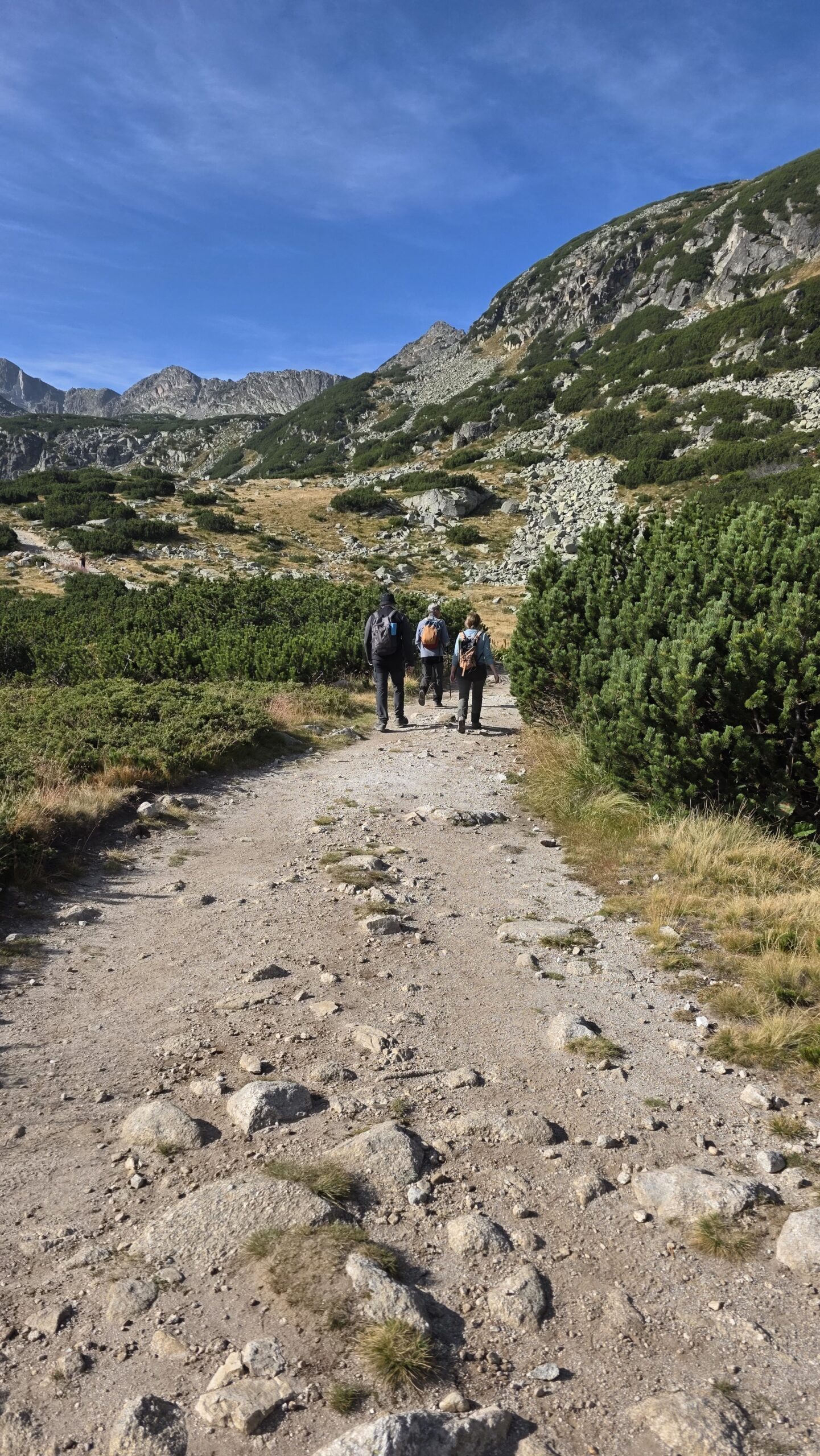
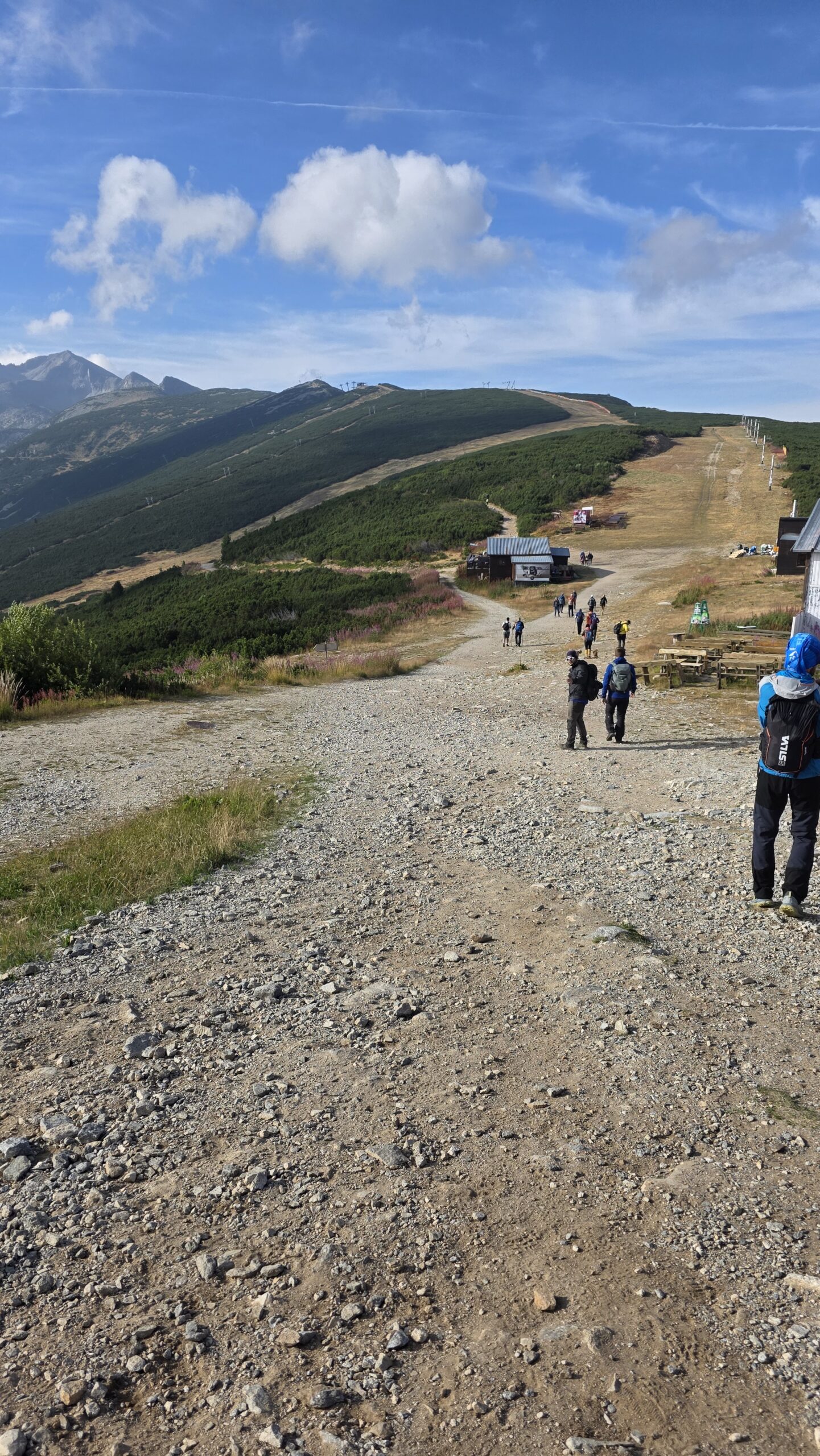
At the upper station, check the direction and the return point before being carried along by the crowd. The initial walking is an opportunity to settle your pace, adjust layers and see how the group feels. Resist the urge to make up time lost in a queue by rushing the first kilometres.
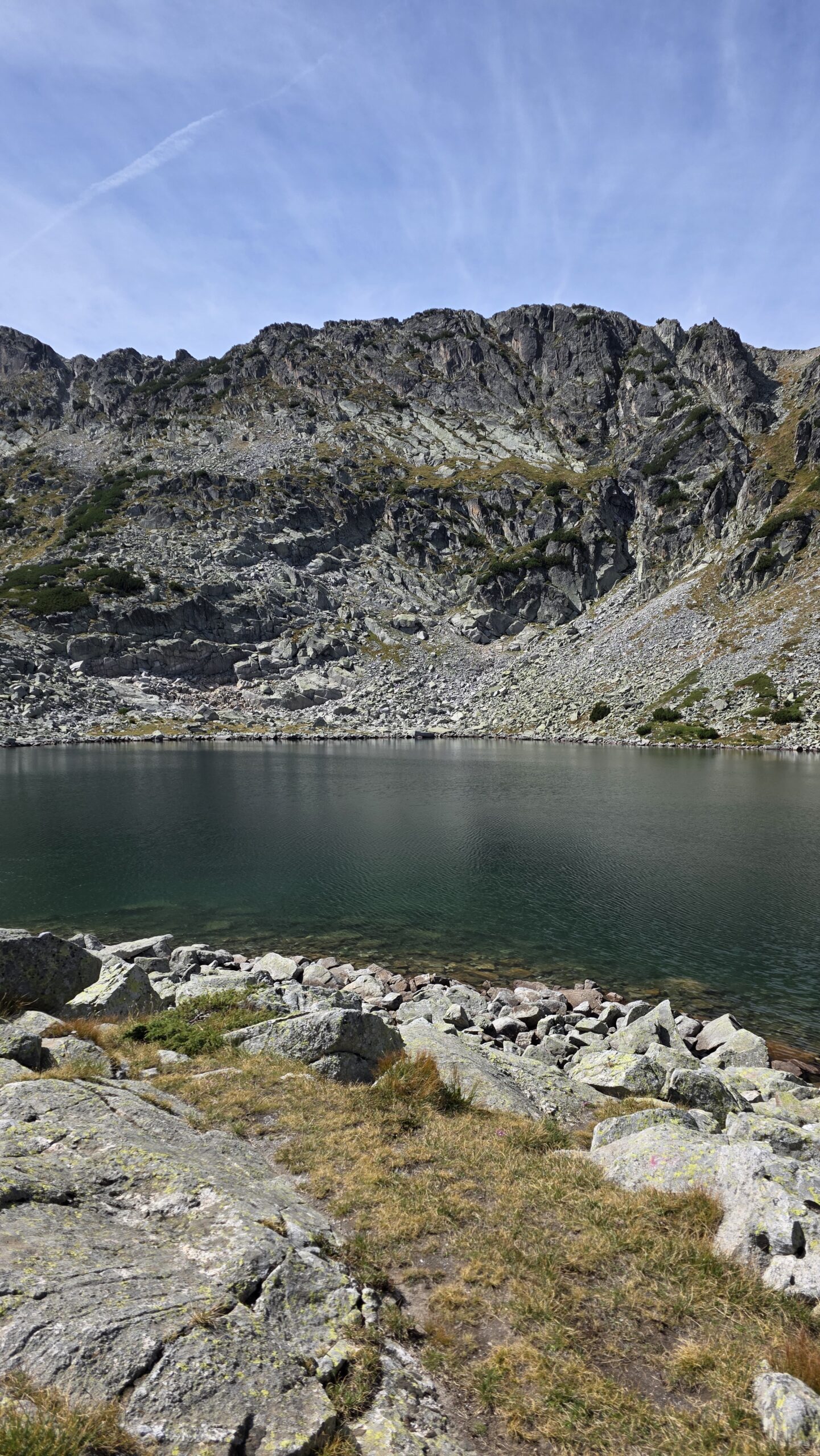
2. Musala Hut and the lake basin
The hut area is a useful checkpoint: confirm everyone has enough energy, water and time to continue. It can also be a satisfying destination for a shorter day. Ask about services that are actually available; do not plan your entire supply around a photograph of an open buffet.
3. Towards the high shelter
Higher up, rockier ground makes foot placement and pace more important. Keep the group together at junctions and stop in places that allow others to pass. Look at the weather ahead and behind you, not only at the summit.
4. The final ascent
From the Ledeno Ezero area, the summit is close in map terms, but tiredness, wet rock, wind or ice can change the effort. Follow the appropriate marked route for the conditions. Do not select a steeper line merely because poles or a cable make it appear direct.
5. Return before the margin disappears
After the summit pause, start down with enough attention left for the rougher ground. Eat, drink and check the clock while the timetable is still comfortable. The route back to the gondola includes walking beyond the hut; reaching the lake basin does not mean you are already at the lift.
This is a geographical overview to help you plan checkpoints. Carry a suitable map and use current local advice for route choice. Musala Hut reference · High-shelter reference.
07 / Season & conditions
Summer is a condition.
Not just a date.
For a first hiking visit, aim for genuinely snow-free conditions and a settled forecast. A date in the calendar is not enough: remaining snow, fresh snowfall and overnight freezing can change the upper route. Ask about the actual line you intend to walk.
| Situation | What changes | A sensible response |
|---|---|---|
| Dry, snow-free weather | The usual hiking plan may be appropriate | Check wind, storms and the return; carry normal mountain essentials |
| Rain or wet rock | Grip, pace and comfort deteriorate | Allow more time and reconsider the upper section |
| Snow or ice | Movement, equipment and route choice change | Seek competent local advice; do not rely on a summer itinerary |
| Strong wind or storms | Exposed ground and lift operation may be affected | Choose a different day or a suitable lower outing |
| Short daylight | Less room for delays or a long walk-out | Reduce the objective and protect the return margin |
Read the mountain forecast
Borovets weather at resort level is not summit weather. Check elevation-specific wind, precipitation, temperature and visibility. Use the PSS Rila conditions page alongside the forecast, and read the observation time. During research, parts of the PSS data feed displayed errors; missing data should lead to a direct check, not an assumption of good conditions.
Winter is a separate outing
Do not copy a dry September track onto snow. Winter route choice, avalanche awareness, appropriate equipment and the skills to use it require a different preparation process. A cable or winter pole line does not make that terrain suitable for an inexperienced summer hiker.
PSS Rila conditions · Resort mountain weather · PSS preparation advice.
08 / Fitness & suitability
Prepare for the descent
as well as the summit.
The gondola removes a large part of the approach, not the need for fitness. Expect a substantial walk on uneven ground and a higher, rougher finish. The ability to continue steadily when tired matters as much as a fast start.
A useful preparation day
Before your trip, choose a long walk with sustained ascent, uneven ground and a proper descent. Wear the footwear and pack you plan to use. Notice your pace over the whole day, how your knees feel downhill and whether you can still move carefully at the end.
How to judge the group
Use the pace and confidence of the person who needs the most time. Agree that stopping at the hut or lake basin is a valid result. If the group has very different expectations, resolve that before boarding the gondola rather than halfway up the mountain.
Altitude and how you feel
You are approaching 3,000 m. Allow an unhurried pace and take feeling unwell seriously. Do not use the fact that a summit is below a round number as proof that everyone will feel fine. If somebody’s condition deteriorates, shorten the outing and seek appropriate help.
When a guide adds value
A competent local guide can help with uncertain conditions, group confidence, navigation and deciding whether the outing suits you. Ask about their qualification, route, group size, equipment and cancellation terms. Guiding is especially worth discussing when the plan moves beyond a straightforward snow-free hike.
The best preparation is not a claim that the mountain is easy. It is a realistic understanding of the day you are choosing.
09 / Plan your days
Two nights can make
one much better mountain day.
A simple three-day outline
Day one: travel to Borovets, settle in, locate the gondola and check the next day’s conditions. Organise food, water and the return. Day two: make Musala—or the suitable shorter objective—the focus of the day. Day three: keep time for recovery, onward travel or a separate visit.
With a weather margin
If Musala is central to your holiday, allow a spare day rather than one immovable summit date. A flexible booking arrangement is more useful than trying to persuade a bad forecast to fit a paid itinerary. Check cancellation conditions before choosing accommodation or a guide.
A hut-based alternative
Splitting the walk can give more time in the mountain landscape. It also adds an accommodation commitment, an overnight pack and another set of service questions. Confirm the actual hut, opening, bed, meals and route before travelling. The existence of a building on a map is not a reservation.
What not to combine casually
Musala, the Seven Rila Lakes, Rila Monastery and Sofia are separate objectives with their own travel. Choose a coherent sequence across several days. A list of places in the same mountain range is not a realistic afternoon itinerary.
If the summit day does not work
Keep a lower outing or a cultural day in reserve. That makes it easier to make a good decision when lifts, weather or fatigue change the plan. The point of the spare day is to reduce pressure, not to create a second compulsory summit attempt.
10 / Where to stay
A resort bed.
Or a real mountain night.
| Base | Why it can work | Confirm before paying |
|---|---|---|
| Borovets | The easiest link to the high-start gondola plan | Walking distance to the station, parking, breakfast and late check-in |
| Samokov | A town base with regional transport | First and last connections or an agreed transfer |
| Musala Hut | Time beside the lower mountain lake | Which building, current operation, bed, meals, water and payment |
| Ledeno Ezero / Everest shelter | A higher overnight arrangement | Actual availability, facilities, access and equipment for the conditions |
Musala Hut: identify the building
The Bulgarian Tourist Union’s listing distinguishes the old hut from a separate new building described there as awaiting commissioning. Do not turn the advertised facilities of an unfinished building into a promise about the accommodation you will find. Ask the host which building you are booking and what is currently provided. Official Musala Hut listing.
The high shelter
The BTS directory places Ledeno Ezero Shelter at about 2,740 m. Its location can be attractive for a divided trip, but a high night is not automatically more comfortable or more appropriate for every visitor. Confirm the sleeping arrangement, bedding, meals and access directly. Official shelter listing.
Questions that save trouble
- Is there a confirmed bed for your date and group size?
- What food and drinking water can actually be obtained?
- What bedding, liner or overnight kit should you bring?
- How do you pay, and what happens if conditions prevent arrival?
Carry enough food and water for the walking day even with a reservation. Keep essential contact details offline. BTS directory and information contacts · Park accommodation overview.
11 / Costs & calculator
Price the whole trip.
Not just a lift ticket.
Count travel, accommodation, food, the chosen lift ticket, insurance and any guide or transfer. A cheap ride does not make a poorly timed journey economical; an extra night or a different arrival day may improve both the outing and the budget.
Currency: use euros for current planning
Bulgaria joined the euro area on 1 January 2026. Older guides, your historical receipts and some operator pages may still show Bulgarian leva alongside euros. The calculator below uses EUR only; it does not perform currency conversion. European Central Bank changeover information.
A published price, with its season attached
When checked on 31 October 2026, the operator’s page labelled Winter Season 2025/2026 displayed a two-way Yastrebets gondola / Sitnyakovo Express ticket at €21 for adults and youth and €11 for ages 65+ and children 7–13. This is a dated reference to the displayed tariff, not a verified price for your next summer visit. Recheck the season, ticket and age category directly. Official ticket page.
Do not assume that insurance attached to a resort lift product covers a Musala mountain hike. Check your own policy’s activity, altitude, rescue and medical provisions.
Check the quote basis
A room price may cover two people, a guide quote may cover a group and a transfer may be one-way. Convert each into the correct field before comparing totals. Do not add the same fuel or transfer twice. Leave an explicit contingency for a changed travel day.
12 / Packing checklist
Carry enough
to change the plan.
This is a starting list for a snow-free hiking day, adjusted to your forecast, route and party. It is not a winter equipment list. Do not solve an unfamiliar snow or ice problem merely by buying an extra item without the skills to use it.
Water and food
Take enough for your expected walking day and a delay. Confirm any refill or meal arrangements rather than assuming lake water is drinking water or that every hut service will be open. Keep a snack accessible for the return, when people are often least interested in stopping to unpack.
Overnight additions
Ask the hut what bedding and personal overnight items are required. Keep the overnight pack manageable; the same rougher ground still has to be walked with it. Protect dry layers and electronics from rain.
The most useful equipment check happens before you board the gondola, while a missing essential is still easy to fix.
13 / Weather & rescue
Know when to shorten
the adventure.
Make the decision while there is room to act
Set checkpoints at the hut, high shelter and summit approach. At each one, consider the weather, group condition, ground and return time. If one no longer fits, turn around while the alternative is straightforward. An early descent is a normal outcome of a good mountain plan.
Thunderstorms and exposed ground
Avoid being committed high on the mountain when thunderstorms threaten. Read the rescue service’s specific guidance in advance and choose a forecast window that gives you room to come down. A fixed lift deadline does not make exposed terrain safe. PSS thunderstorm guidance.
Save the current emergency contacts
Emergency: 112
PSS central rescue contacts: +359 2 963 2000 and +359 887 100 237.
The PSS announced closure of its old 1470 short number on 26 August 2026. Do not copy that number from an older guide. Read the official notice · Current PSS contacts.
If you need help, describe what happened, the number of people, your location and conditions. Keep location information available and follow the dispatcher’s instructions. Your phone, power reserve and offline map are part of that preparation. PSS accident guidance.
Insurance deserves a direct check
Ask the insurer about the planned activity and altitude, mountain search and rescue, medical treatment and repatriation. A general medical entitlement or lift-ticket inclusion should not be treated as a complete answer. PSS explanation of mountain insurance and rescue costs.
14 / Maps & orientation
A map for the route.
A note for the return.
Prepare the route before travelling and keep it available offline. BGMountains online mapping is a useful planning starting point. Check the exact path, junctions, hut positions and the station you intend to return to. A summer line on a map does not determine the correct winter route.
Map centred on the BTS-listed Musala Hut location. Geographical context only; not a verified route track or live access map. © OpenStreetMap contributors.
Put these in one offline note
- The correct upper station and walking start.
- Your route and any pre-arranged overnight stop.
- The confirmed last descent and a generous return margin.
- Hut, guide, transport and rescue contacts.
- The person who knows when to expect you back.
Why the activity screenshot is not a GPX download
My original post contains a historical activity image. It supports the distance and ascent I recorded, but it is not a downloadable route file and does not verify today’s conditions. Use it as context for the diary, then prepare your own current route.
15 / Protect the park
Keep the lakes
as you found them.
Rila is a national park, not simply an outdoor backdrop. Its published visitor rules require staying on marked tourist routes and prohibit bathing or swimming in rivers and lakes. Camping and fires are limited to specifically marked sites. Read the park’s rules and prohibitions.
A photograph without a shortcut
Keep to established ground rather than trampling vegetation for a clearer lake reflection. Do not pick flowers, leave food or move stones to build a new photo arrangement. Carry out litter, including small wrappers and tissues.
Respect the people working here
Hut teams, rescue staff and the scientific station have jobs beyond supporting your summit day. Ask courteously about services, observe access restrictions and do not assume a working building is a public shelter.
Dogs and camping
The park’s rules include requirements for controlling dogs. If travelling with one, confirm the current route, lift and accommodation conditions before making the journey. For an overnight plan, arrange a legal stay and check any designated camping provision directly; an attractive lakeshore is not automatic permission to pitch a tent.
Check the park’s current notices before departure, particularly if your plan includes a longer stage or an activity beyond ordinary marked-route walking. Rila National Park news and contacts.
16 / Beyond the summit
Build a Bulgaria trip.
Not a list of checkboxes.
Enjoy the basin without the summit
A shorter outing towards Musala Hut can be the right choice for a mixed group or a day that does not support the upper route. It still requires suitable weather, equipment, navigation and a lift return plan. Do not label the shorter option effortless for every visitor.
Borovets and Samokov
Use a spare day to slow down at your base: a meal, a modest walk and time to recover can improve the next mountain day. Ask locally about a route appropriate to the current conditions rather than transferring a ski-piste colour to a summer hiking difficulty.
Sofia
A city day before or after the mountain gives your arrival more flexibility. Use the municipal tourism information to select a manageable area or a particular museum or walk. Avoid trying to fit a full city tour into a tired summit evening. Official Sofia visitor information.
Rila Monastery
The UNESCO-listed monastery is a separate cultural destination. Plan its own transport and visiting time; being in the Rila region does not make it a quick detour from the upper Musala route. UNESCO’s Rila Monastery overview.
The Seven Rila Lakes
These are a different outing from the Musala lake basin. If they are part of your trip, research the correct access, route and transport independently. They should not become an extra objective added to a Musala summit day because the names sound close on a travel list.
17 / Photography notes
Look beyond
the summit marker.
My Musala photographs move between three scales: people on a path, flowers and water close to the ground, then rock and sky above. Use that variety to tell the story of a mountain day. A collection of summit portraits alone misses much of what makes the route distinctive.
Build a small visual sequence
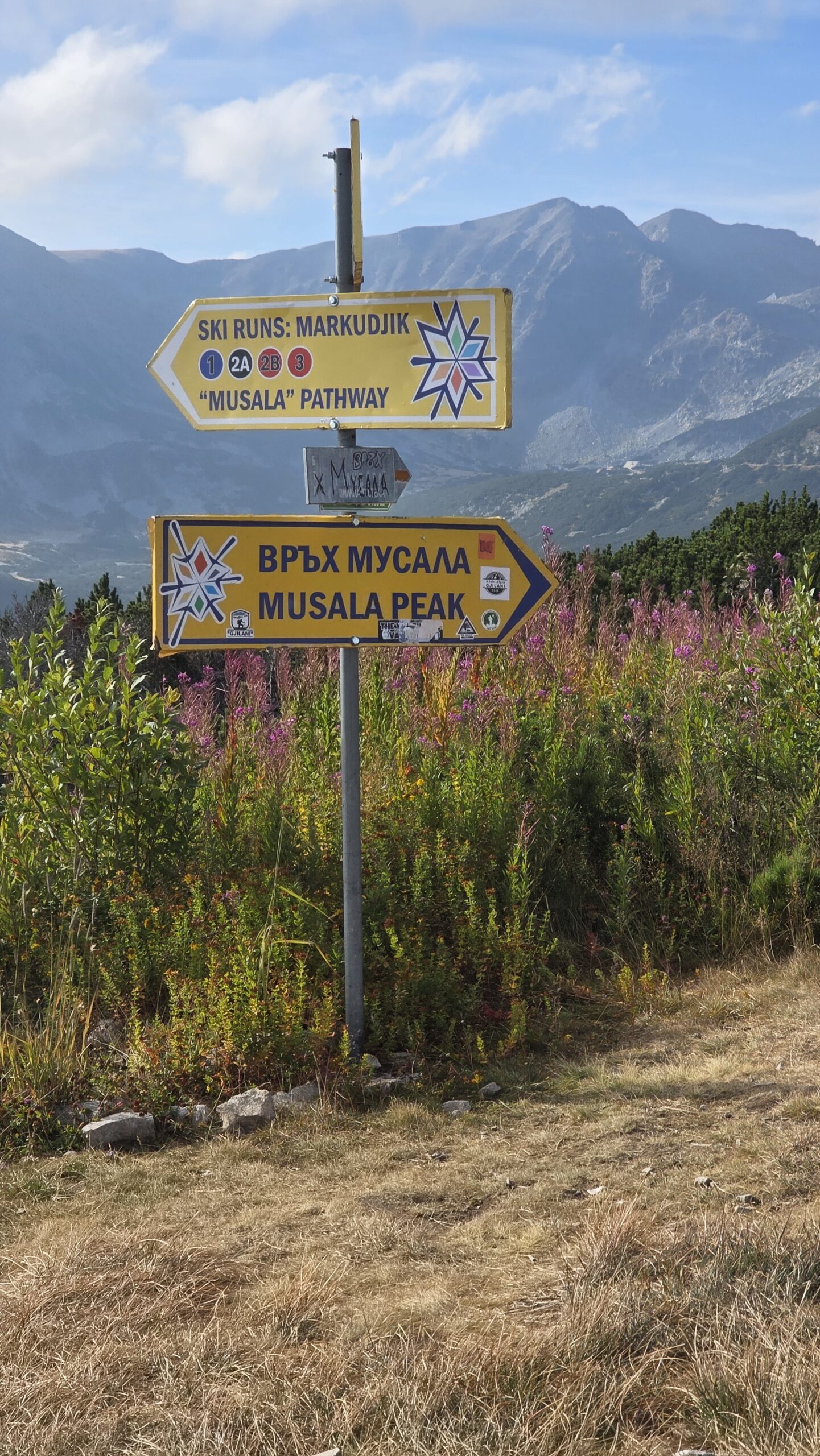
Start with the gondola or the beginning of the walk. Add a direction sign or a path that gives the viewer a sense of movement. Then look for a lake edge, a wider basin view and a final portrait. Keep a few frames for the return: the light and your attention may have changed.
Protect the timetable
Photographs need a time allowance just like lunch. If you stop often, put that into the plan rather than hoping to recover it on the descent. Take the longer pause while you still have generous return margin, and shorten the photo session when conditions change.
A practical camera choice
Carry what you can use without repeatedly unpacking. A phone or one familiar camera can be a better companion than a bag that makes every stop complicated. Protect the lens from rain and stow the equipment securely on rougher ground.
Ask before making somebody the clear subject of a portrait. Give others space at the summit marker and avoid stepping onto fragile ground for a cleaner angle. A photograph should describe the place without making the next person’s visit worse.
18 / My September climb
11:03.
Blue sky above the Balkans.
4 September 2025. After Olympus, Musala brought a different kind of mountain day.
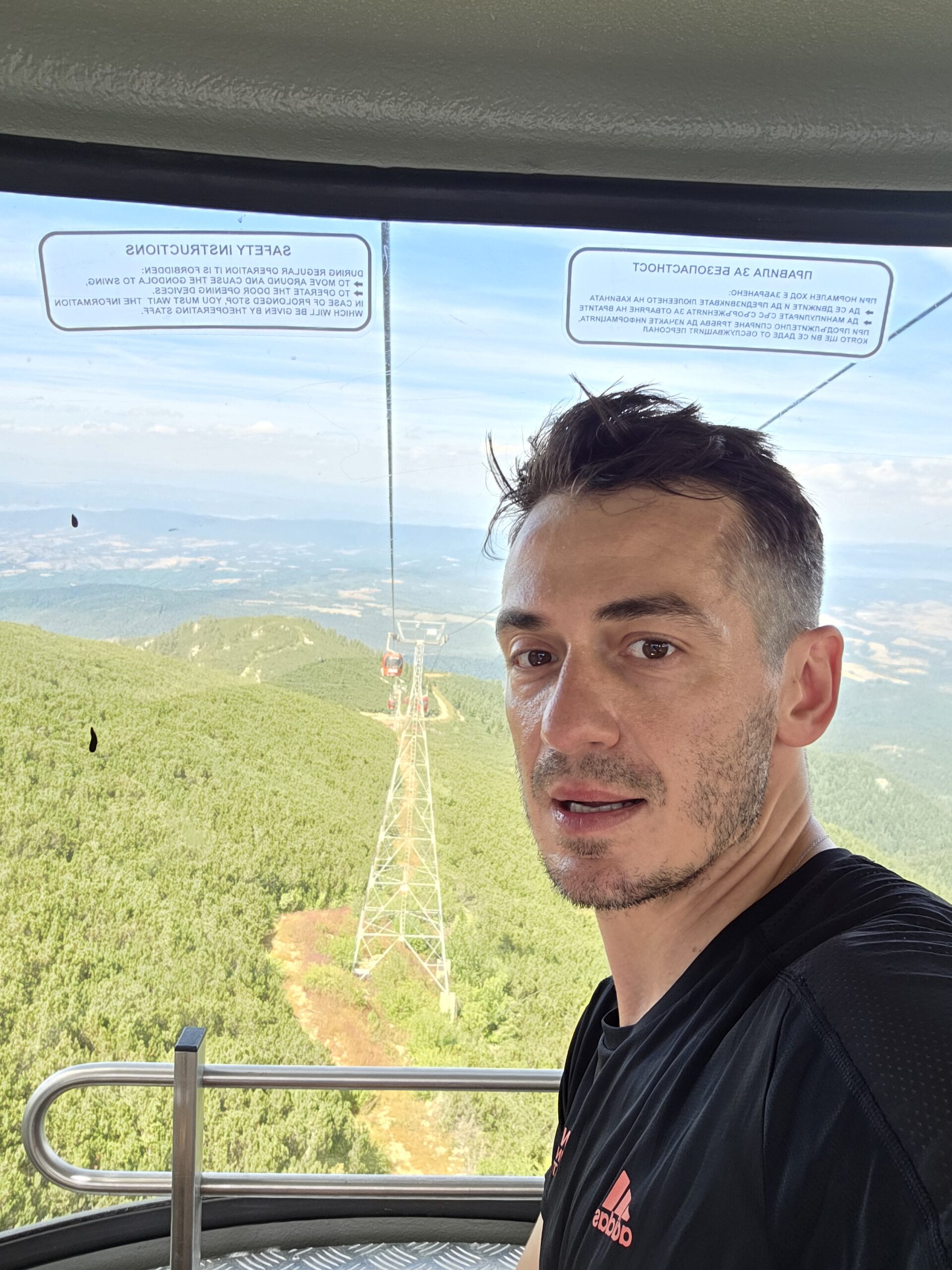
I drove from Prionia to Borovets, recording 384 km in my expedition diary, and slept in the car near the cable-car station. The next morning I used the first gondola and began walking at about 09:20.
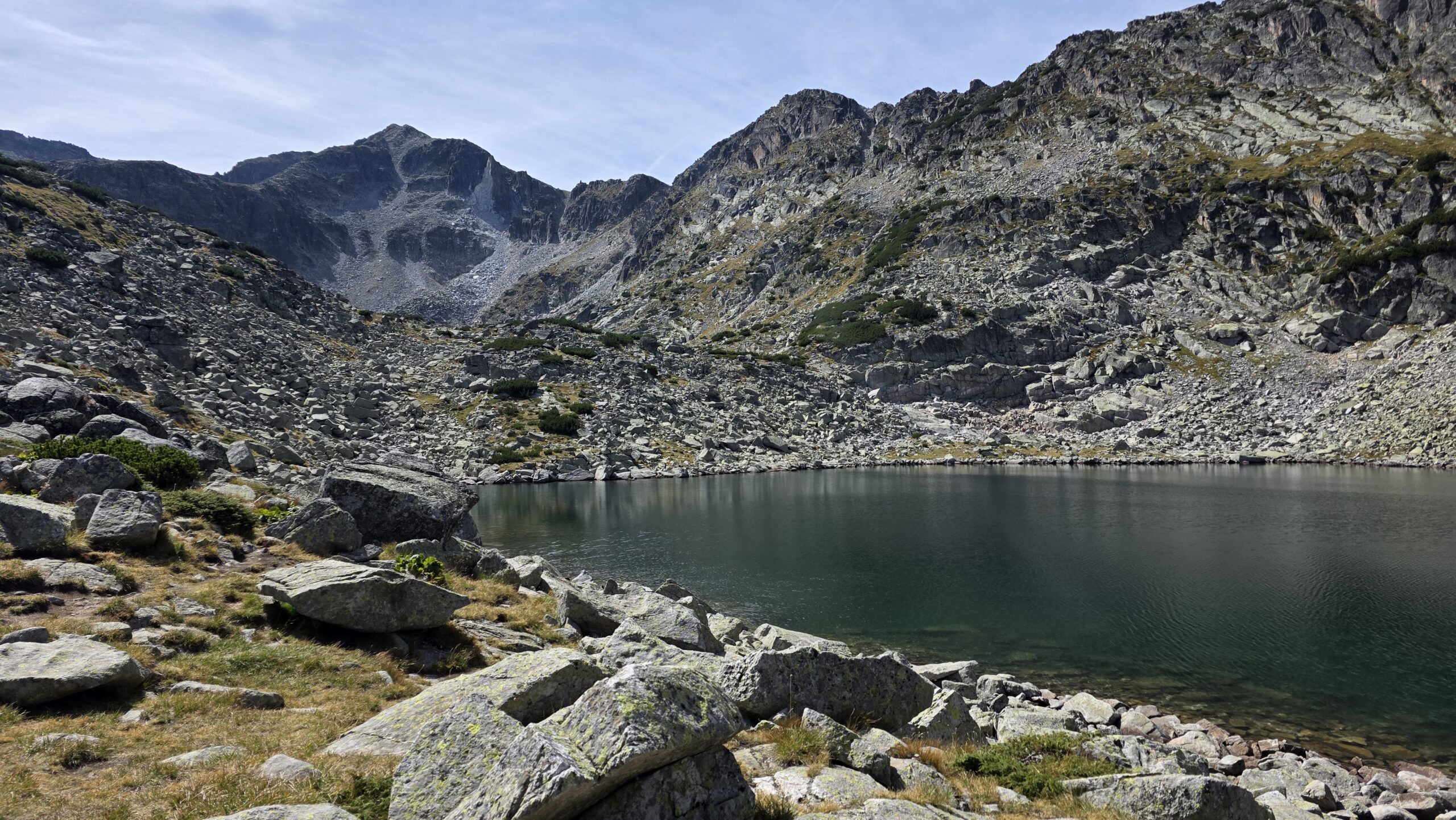
The day was clear, with a cool breeze. I passed the hut and climbed through the lake basin to the summit at 11:03. There were other hikers to talk to, ridges fading into the distance and time for a short pause before coming down. My diary places me back at the car around 13:00.
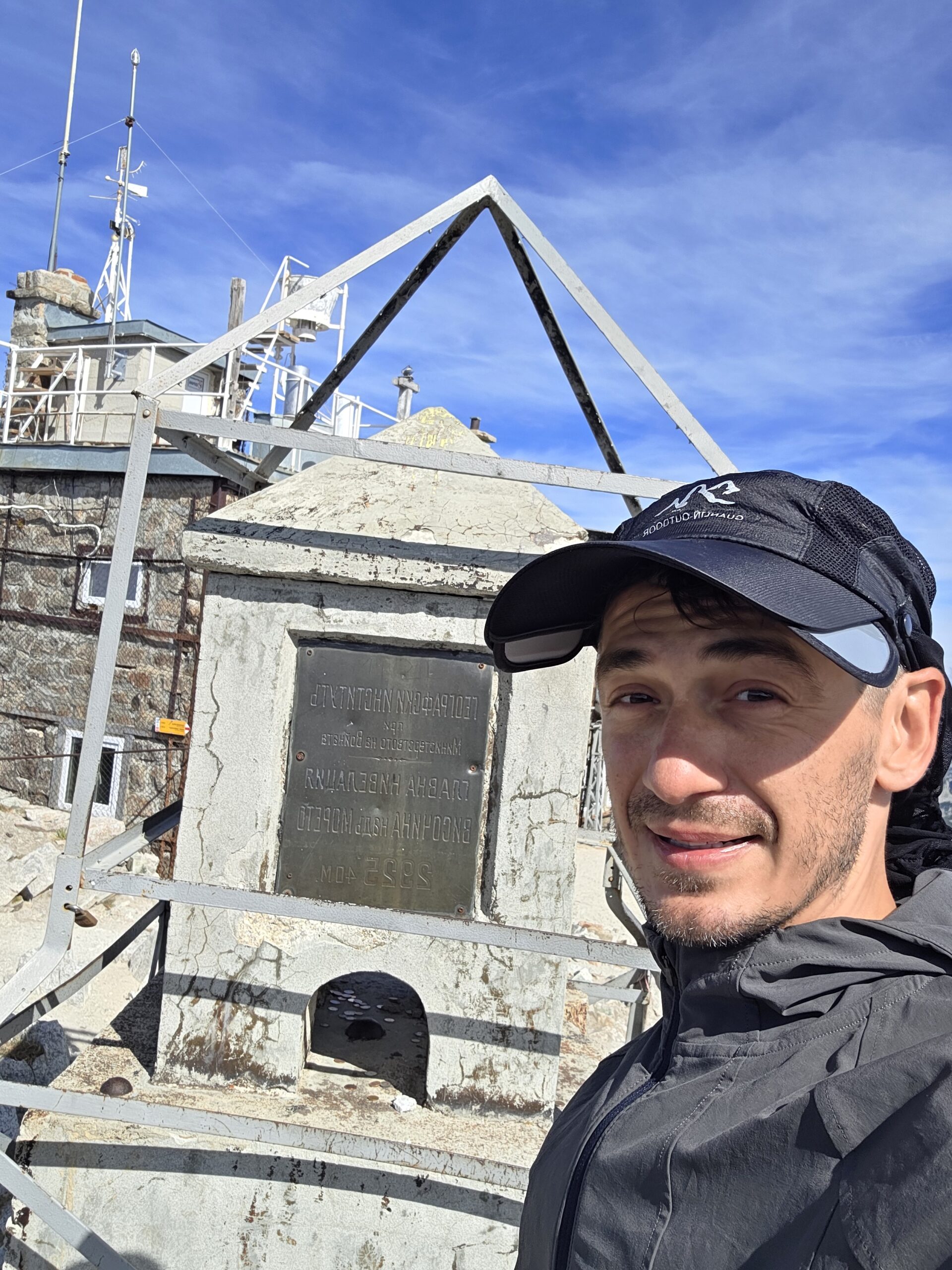
My activity image records 14.12 km, 723 m of ascent, 2:45:10 moving time and 3:37:04 elapsed. Those are historical expedition figures, not a pace or return margin for a visitor to copy. The planning sections above give the walk room to be enjoyed.
What stayed with me was the contrast: fatigue from the previous mountain, then the stillness of the water and the space in the view. The summit mattered, but the calm was the part I remembered.
19 / Questions answered
The useful questions.
Is Musala the highest mountain in the Balkans?
Yes. At the commonly used elevation of 2,925 m it is Bulgaria’s and the Balkan Peninsula’s highest summit.
How long does the gondola-assisted hike take?
Published ascent references are roughly three to four hours, with substantial variation. Reserve a generous six to eight hours for walking and breaks as an initial snow-free planning allowance, then adjust to your pace and the actual operating window. Lift rides and queues are extra.
How far is the usual high-start walk?
My recorded September outing was 14.12 km with 723 m of ascent. That is my historical route and should not be treated as an exact specification for every variant.
Can I hike from Borovets without the gondola?
Yes, the classical walking approach is described in the route sources, but it makes a much bigger day. The lower station to summit net height difference alone is about 1,610 m. Plan that option deliberately.
Is the Yastrebets Express the same as the gondola?
No. They are separate resort installations. Check the gondola serving your intended high start rather than relying on the similar name.
Does a timetable mean the gondola is running?
No. The operating date, maintenance, actual status and weather matter. At the October 2026 research check, general hours remained visible alongside an all-lifts-closed announcement.
What if I miss the last gondola?
You may face a long additional descent or need a different planned arrangement. Do not rely on an unannounced hut stay or a lift running late. Protect a generous return margin from the start.
Do I need a guide?
A prepared hiker may choose the usual marked route in suitable snow-free conditions independently. If your experience, route confidence or the conditions are uncertain, discuss the outing with a competent local guide. Snow and ice need a separate plan.
Can I sleep at Musala Hut or the high shelter?
Arrange a real reservation with the host and confirm the building, operation, facilities and payment. A directory entry is not proof of an available bed.
Can I swim in the lakes?
No. Rila National Park’s published rules prohibit bathing and swimming in its rivers and lakes.
Which currency should I use?
Bulgaria uses the euro from 1 January 2026. This guide’s calculator uses EUR only; historical lev amounts are not live quotes.
Does the lift ticket cover mountain rescue?
Do not assume it covers your Musala hike. Check the activity, altitude and rescue cover in your own policy.
What is the emergency number?
Call 112 for an emergency. PSS also lists +359 2 963 2000 and +359 887 100 237. The old short number 1470 was closed in August 2026.
Can I visit the Seven Rila Lakes on the same route?
They are a separate destination from the Musala basin. Plan their transport and walking independently rather than adding them to the end of this summit day.
Is my child or a beginner ready for Musala?
Judge the actual person, conditions and complete return day. Choose a shorter objective or seek local guidance if fitness, confidence or mountain experience is uncertain.
Can I use this guide for a winter ascent?
The walking plan is aimed at suitable snow-free conditions. Winter terrain, avalanche decisions, equipment and skills require separate preparation and current local advice.
20 / Useful links & sources
Your planning desk.
Research checked on 31 October 2026. Photography and expedition figures are from 4 September 2025. Operator tariffs and hours have seasons attached; hut-directory information is not a live availability feed. Check the actual date and service you intend to use.
Start with the park for access, Borosport for the gondola, BTS and the host for accommodation, and PSS for mountain preparation and rescue information. A status page with an incomplete feed is a reason to ask directly rather than fill the gap with an assumption.
Elevation, mountain setting and the working summit observatory
Borovets approaches and ascent-time references; not a rail service to the trailhead
Current park news, restrictions and contacts
Marked routes, lakes, camping, fires and protection of the park
Mountain accommodation context; confirm current services with the host
Check operating days, actual status and the final descent for your date
Read the season and ticket type as well as the amount
Resort services, maps and contacts
Elevation-specific observations and forecasts
The old hut, the separate new-building listing and published contact routes
The high shelter, elevation and indicative walking stages
Current directory and information-centre contacts
Published Samokov–Borovets services; confirm the date, seasonal notes and fare
Check timestamps and seek current advice if the feed is incomplete
112 and the central rescue contact numbers
Planning, equipment and decisions in the mountains
What information to provide when requesting help
Rescue-service guidance on thunderstorms
Rescue costs and why mountain cover matters
The August 2026 notice; save current contacts instead
Detailed mapping for preparing your chosen route
Bulgaria joined the euro area on 1 January 2026
A separate cultural destination to plan into a wider Bulgaria journey
City information for a separate arrival or recovery day