Altitude: 5,642 m
Coordinates: 43°21′18″N, 42°26′21″E
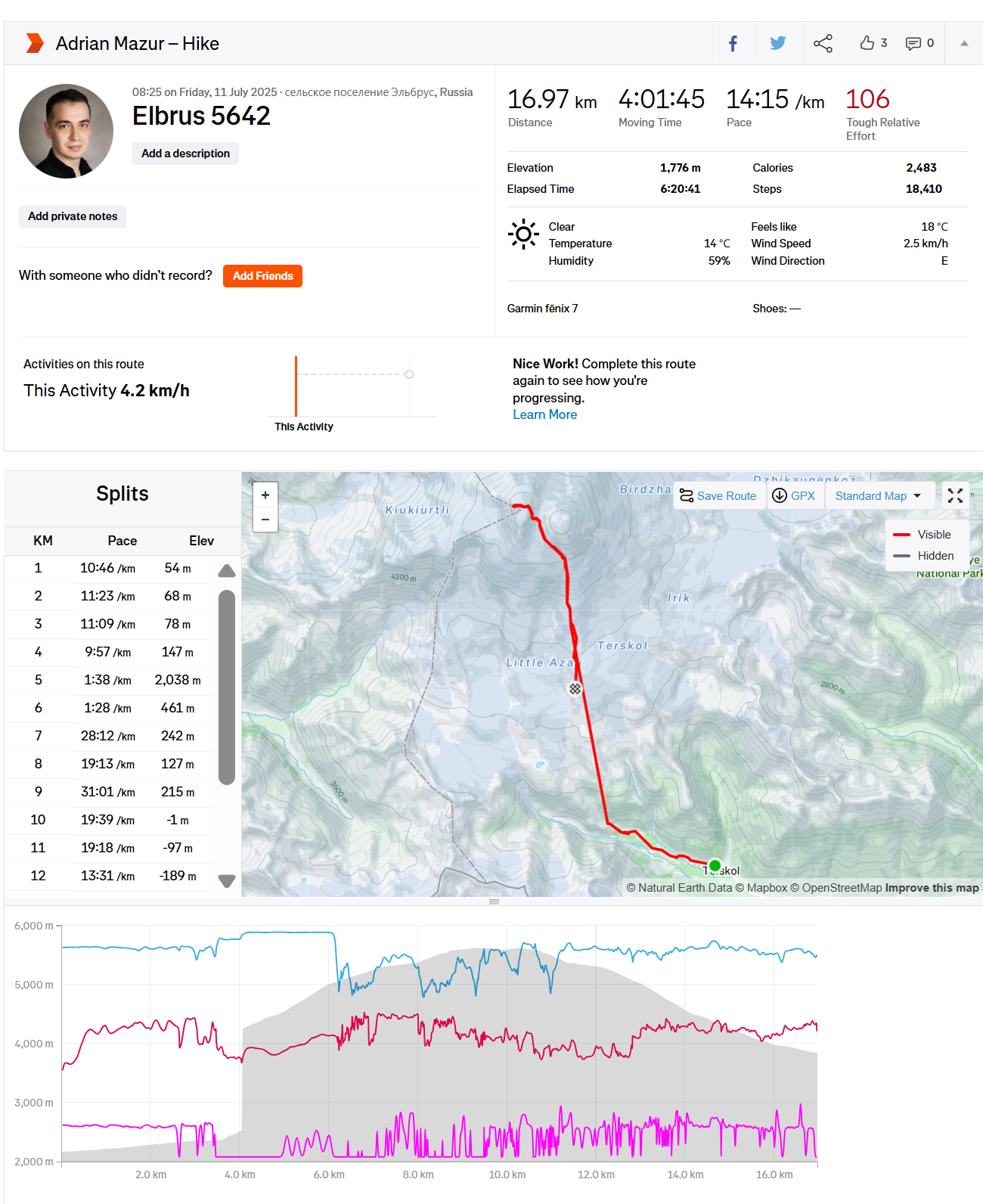
Route: Terskol – Cable Car – Garabashi (Barrels) – Summit – Return
A Mountain I Couldn’t Risk Losing
Elbrus had to come first.
Before any other mountain of the Crown of Europe, I needed to know if I could even cross into Russia. Without Elbrus, the entire project would remain incomplete unfinished business haunting every step that followed.
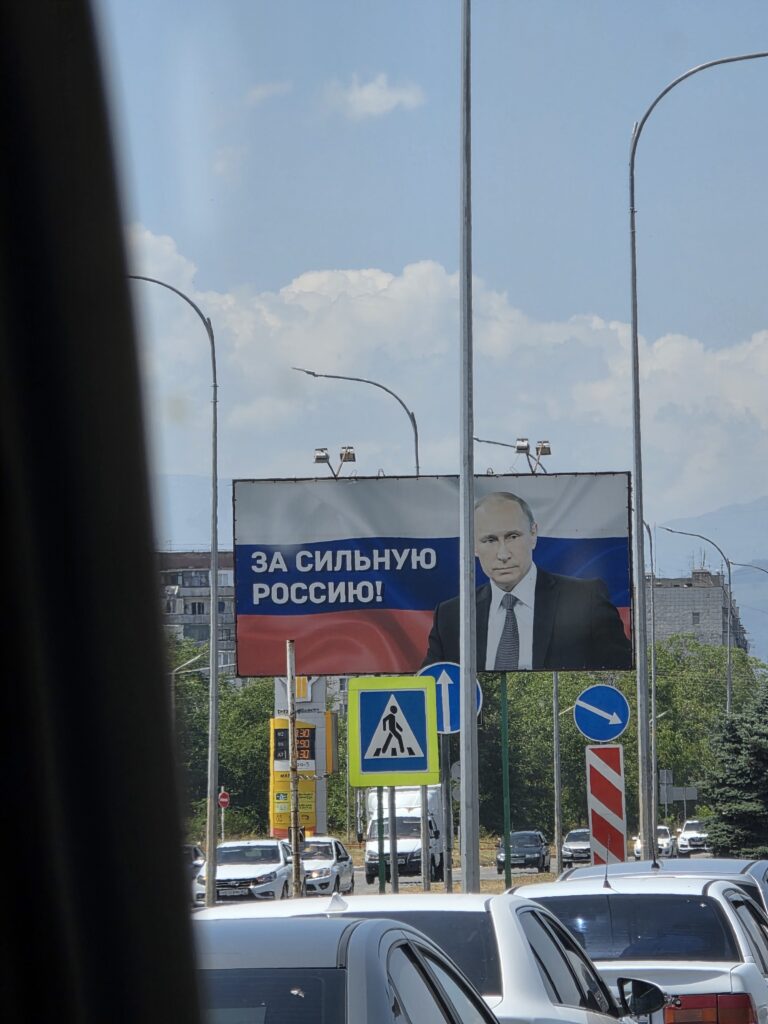
Crossing the border from Georgia into Russia was one of the most intense moments of the entire expedition. The atmosphere was heavy with suspicion. Armed guards checked documents line by line, asking question after question. They couldn’t quite believe that a Polish traveller was entering Russia alone, carrying mountaineering gear, no guide, and no local contact.
I was honestly frightened my heart raced, and the thought of being refused or even detained crossed my mind. For several long minutes, I waited in silence while they checked every page of my pass
port. When the final thud of the entry stamp came, I exhaled fully for the first time. The border opened and with it, the door to the entire Crown of Europe.
Journey to the Foothills
From there, the journey became its own adventure:
- ✈️ Flight: London → Tbilisi – 3,584 km
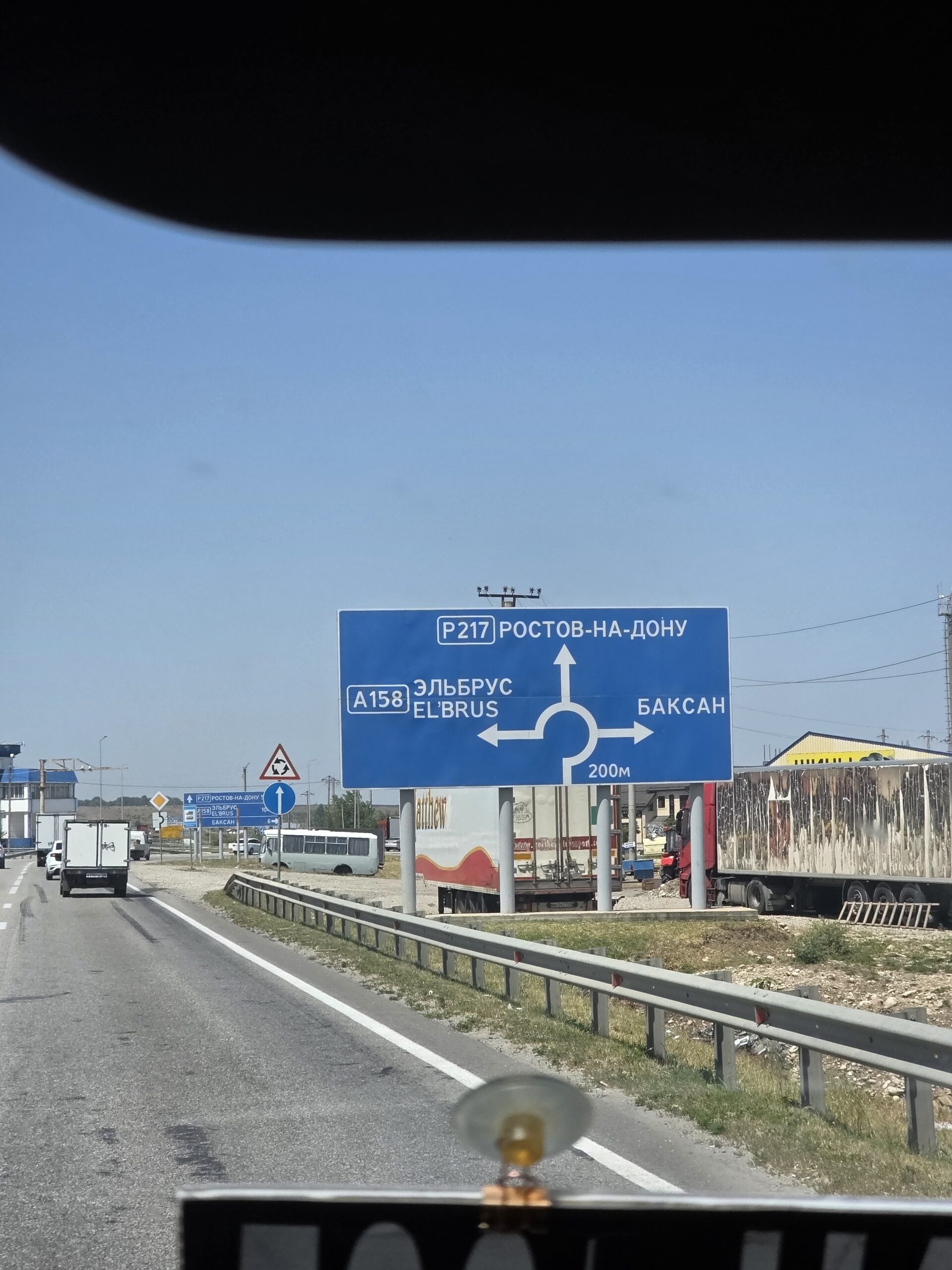
- 🚌 Bus: Tbilisi → Vladikavkaz – 193 km
- 🚌 Bus: Vladikavkaz → Nalchik – 118 km
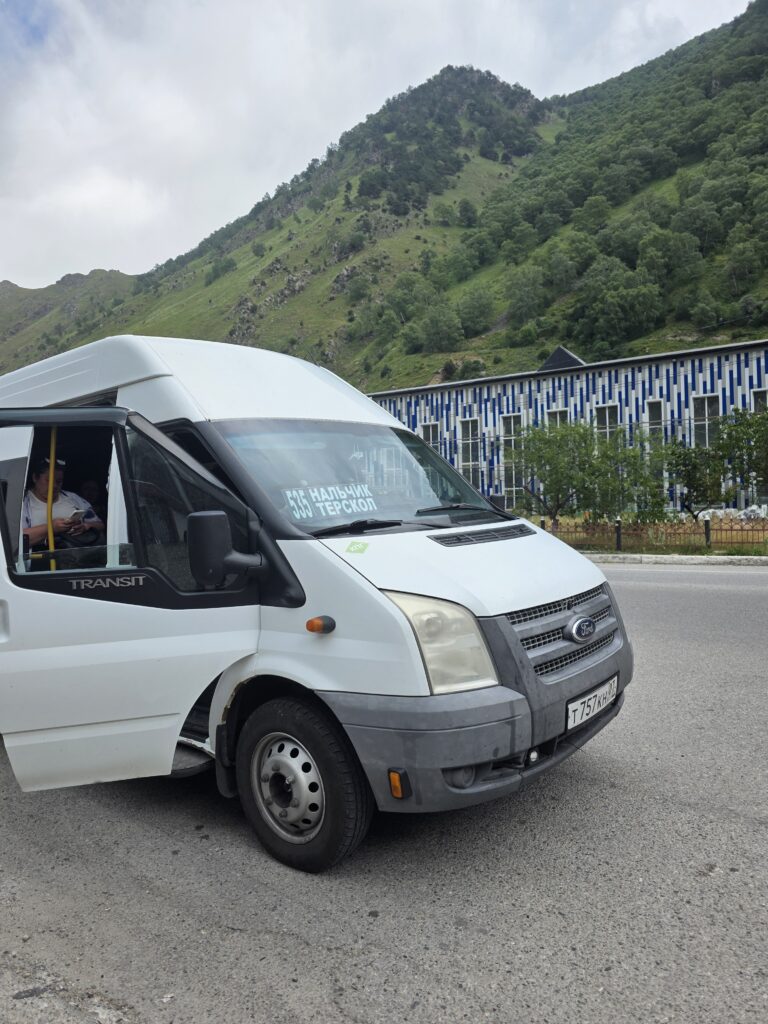
- 🚌 Bus: Nalchik → Terskol – 123 km
Total: 4,018 km
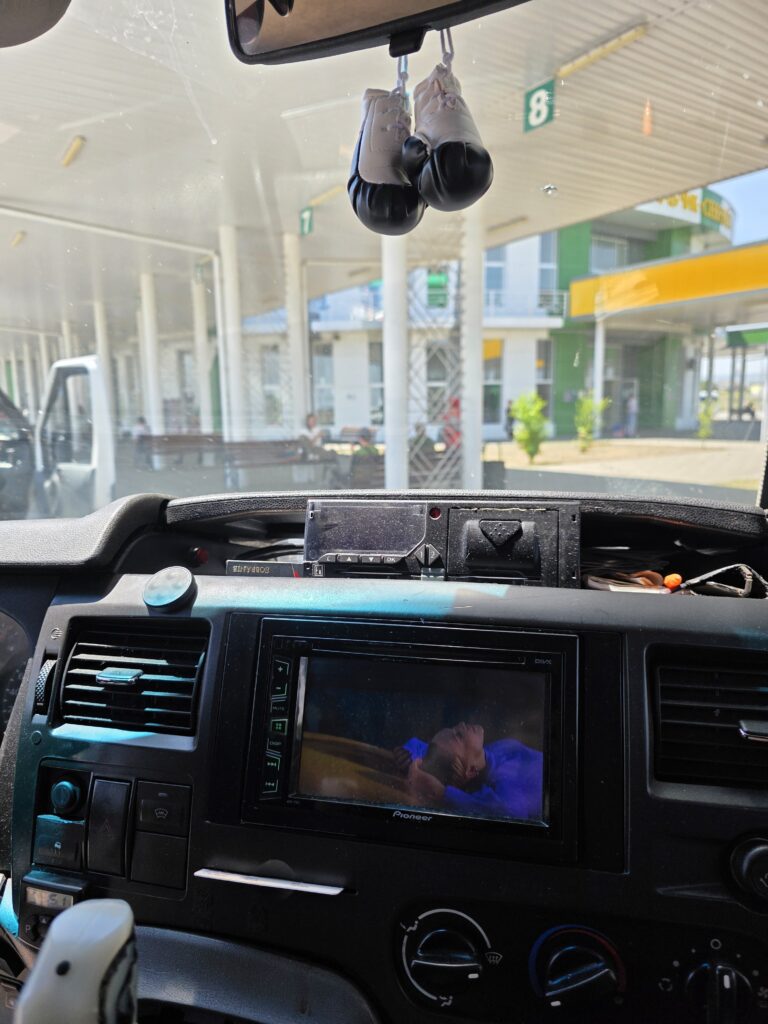
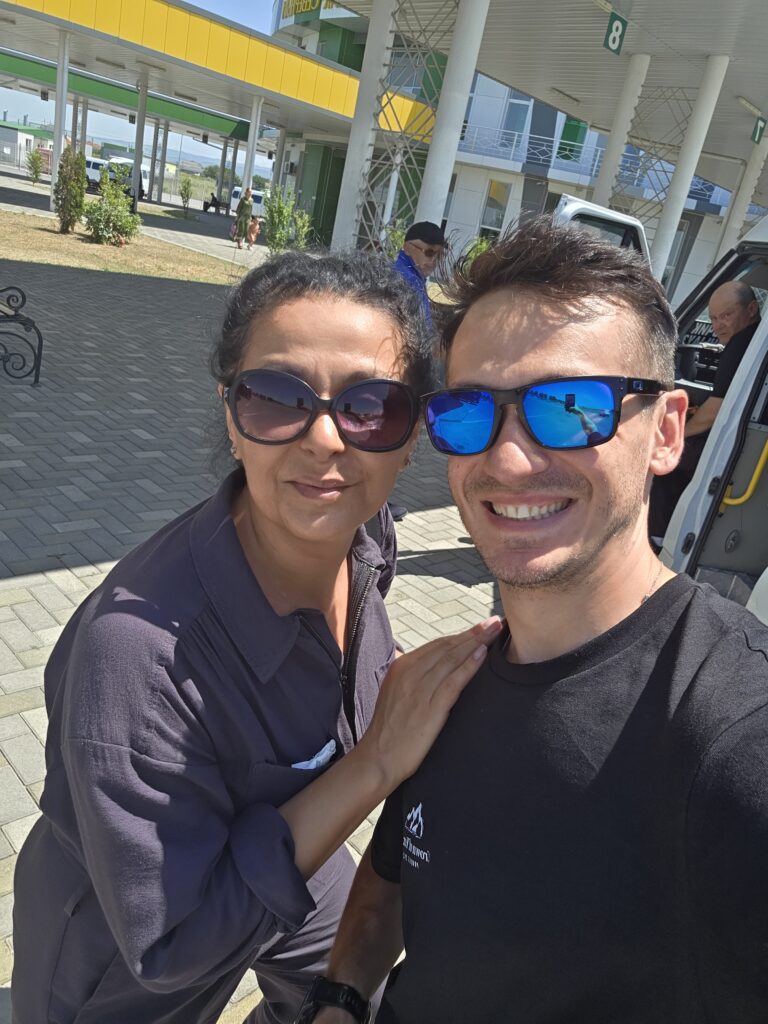
Each transfer was improvised. My Russian eSIM failed, leaving me without internet or translation. I relied on hand gestures, smiles, and pure luck. Yet people along the route were incredible some of the kindest I met in all of Europe. Drivers shared snacks, locals guided me to the right platforms, and strangers made sure I reached Terskol safely.
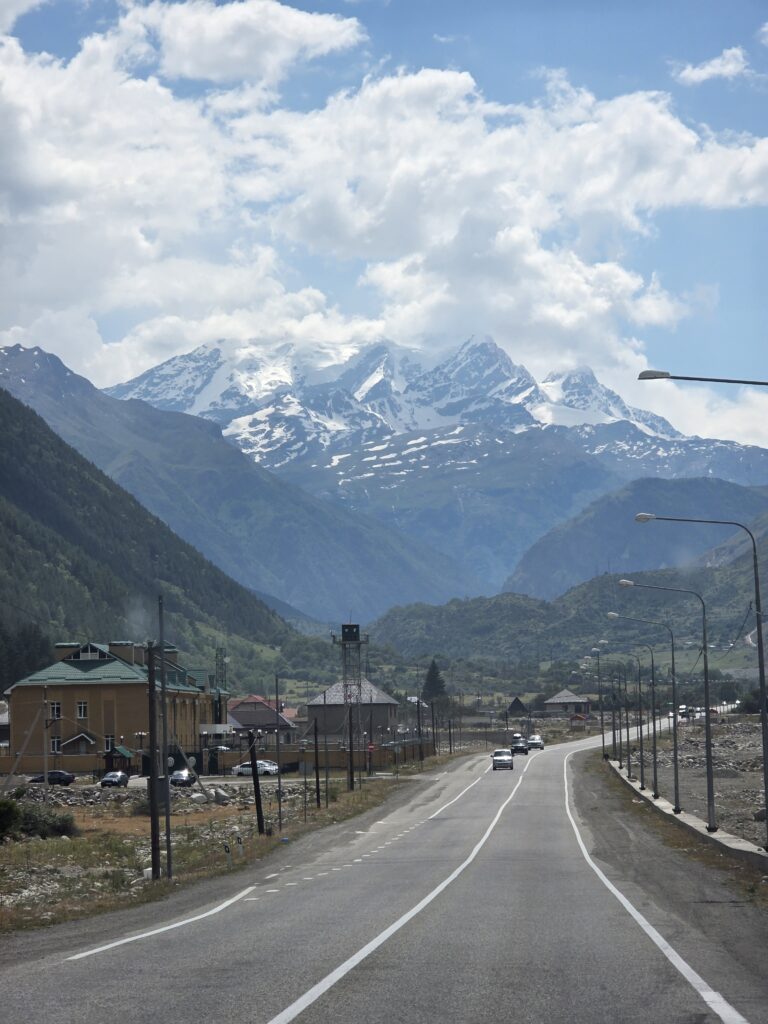
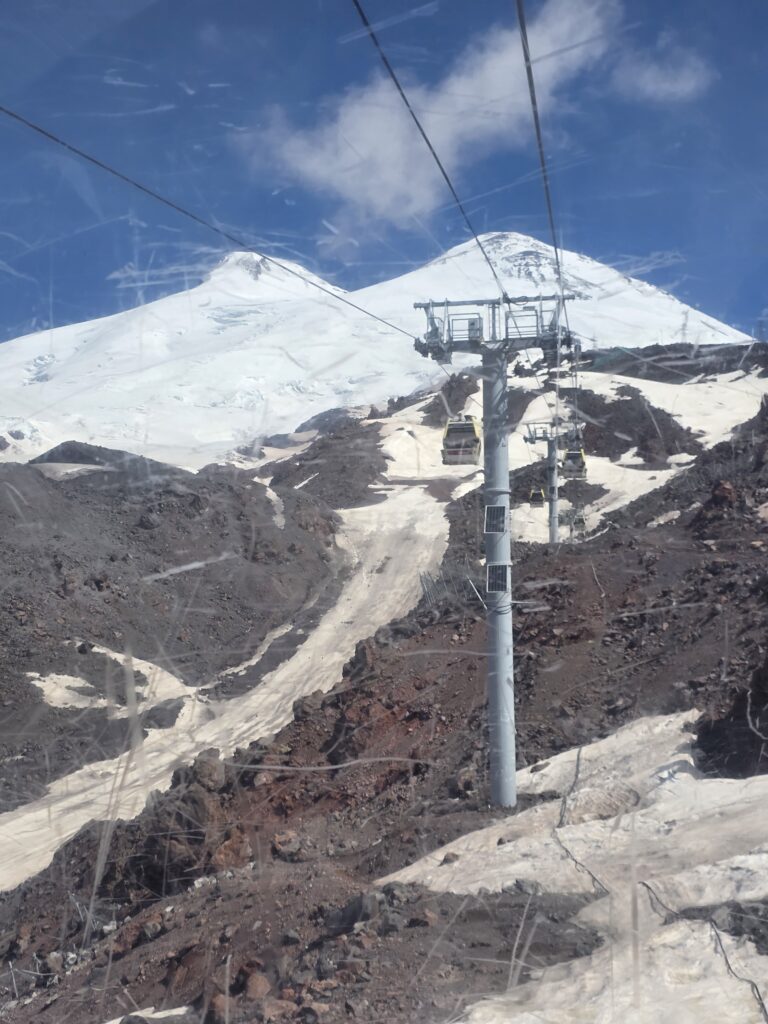
By the time I arrived, the twin domes of Elbrus towered above snowfields shining in the evening light.
Racing the Clock
On 10 July, I reached the cable-car station at 15:40.
Ten minutes too late.
The lift had just closed.
My schedule was brutal every day linked to the next flight, the next summit. Missing Elbrus could derail everything. I checked the locked gates, stared up the mountain, then admitted defeat for the day.
That night I stayed at Black Point Mini Hostel, eating whatever I could find, recalculating the plan. Outside, Elbrus glowed pink in the dying light quiet, indifferent, eternal. Tomorrow, I promised myself, I’d catch the first lift.
Into the White World
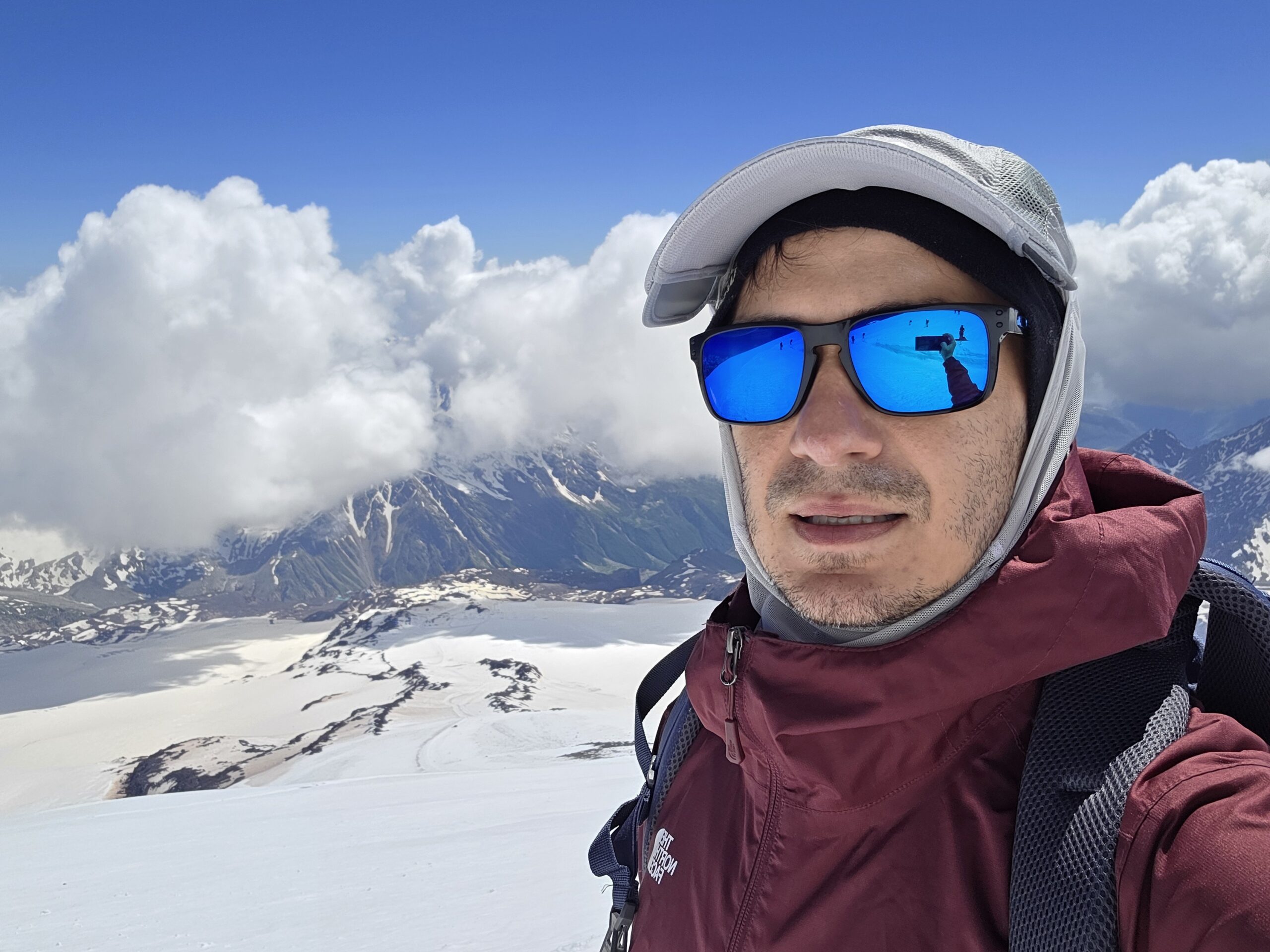
At 09:00 on 11 July, I boarded the first cable car, adrenaline humming. By 10:00, I stood at the upper station, ready to climb. Time was tight barely six hours for the entire ascent and descent so I took a snowcat to 5,000 metres, a standard and accepted practice on Elbrus.
From there, it was just me, my poles, ice axe, crampons, and a few layers. The weather was stunning calm, warm for altitude, the sky a flawless blue stretching over the Caucasus. I moved fast and light, trying to ignore the fatigue from days of travel.
Then, disaster struck: my last bottle of water slipped from my pack, tumbled down the slope, and vanished into the snow.
Four hours of climbing ahead. No water.
At first, panic then resolve. I tried melting snow in my mouth; it only numbed my lips. My throat grew raw, my steps mechanical: breathe, lift, plant, repeat.
Alone on the Roof of Europe
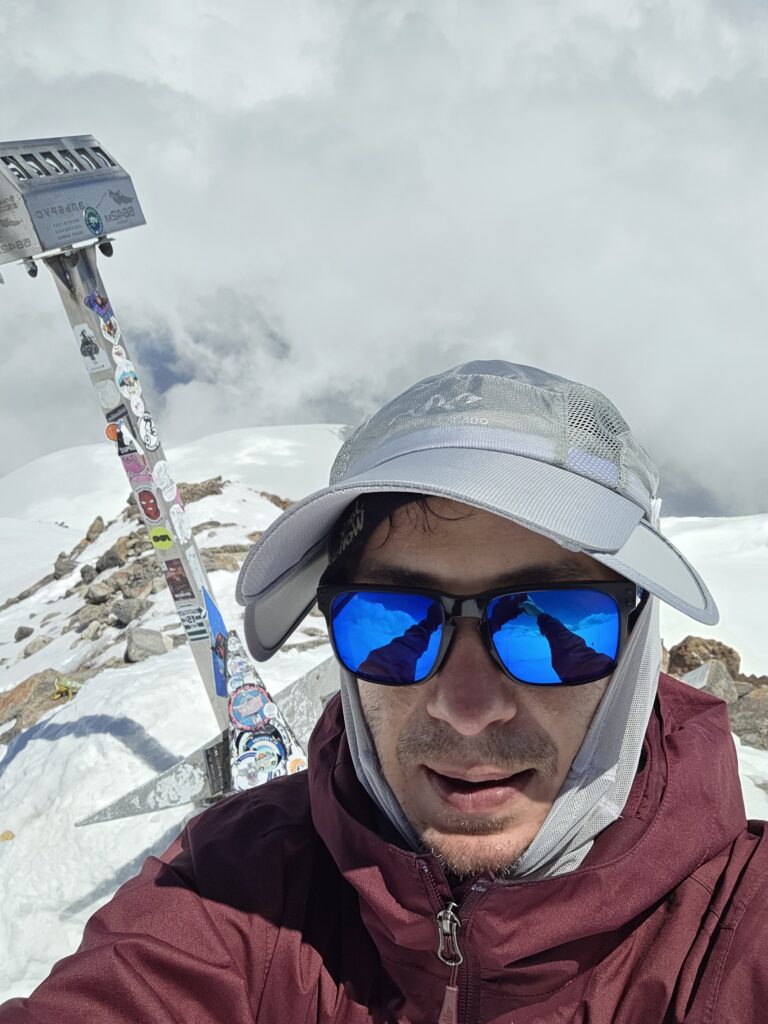
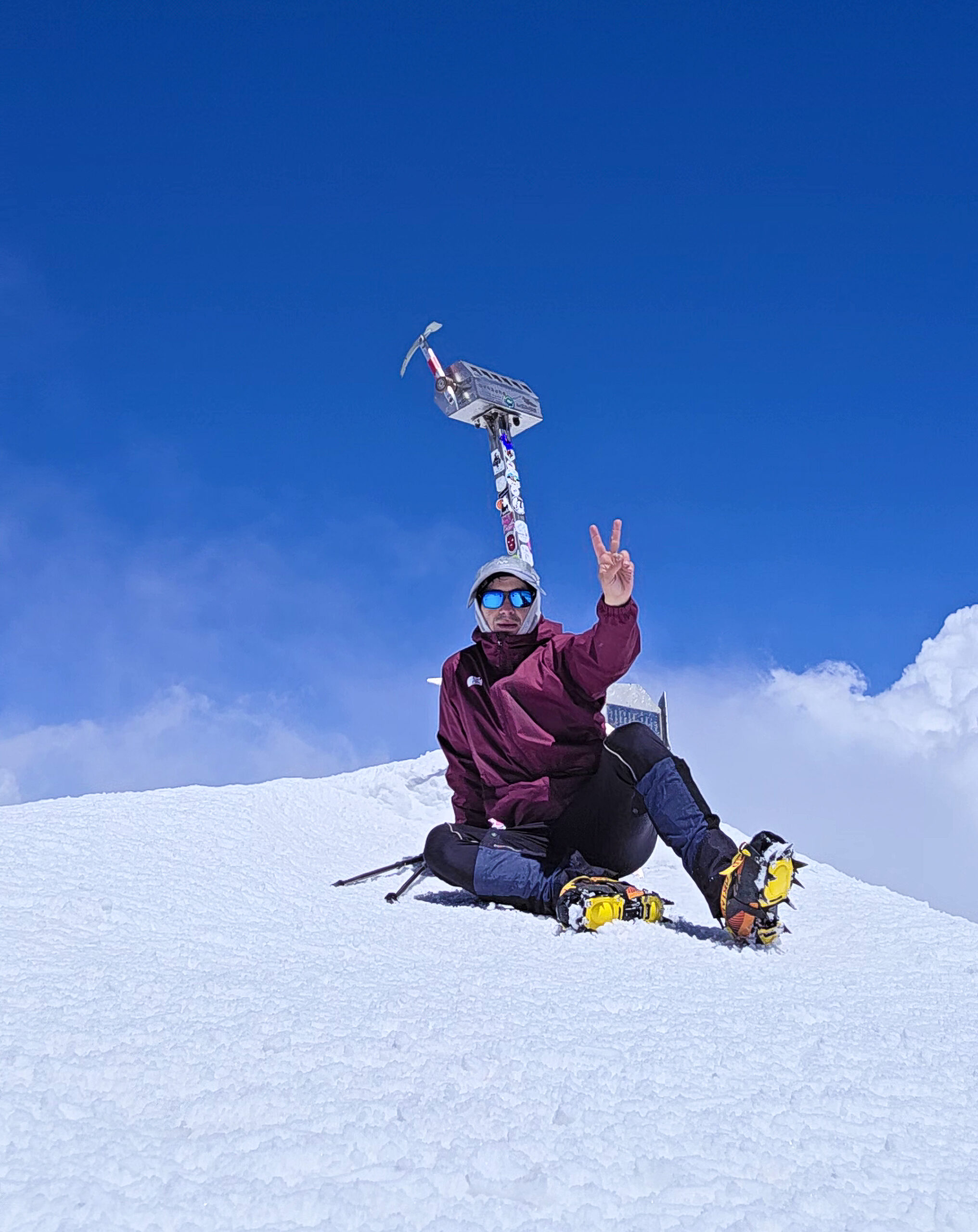
At 12:12 p.m., I reached the summit of Mount Elbrus (5,642 m), the highest point in Europe.
The silence was total.
No voices, no wind, no sound except my breath in the thin air. I stood alone, surrounded by an ocean of white peaks, disbelief flooding through me. After so much uncertainty the border, the travel, the timing I was here.
This was more than just a summit; it was the ignition of the entire project. I took a quick photo with my Insta360 and phone a single frame capturing perfect visibility across the Caucasus — then turned back before the mountain decided otherwise.
Not too Long Descent
The descent was steady but swift. The sun softened the snow, and dehydration gnawed at my focus. By 15:45, I reached the upper cable-car station; by 16 30, I was back in Terskol.
I packed my gear, ate whatever I could find, and took a taxi toward Vladikavkaz. At 23:00, I joined a shared car to Tbilisi, crossing the border again at dawn. Exhausted, sunburned, but filled with quiet satisfaction, I had done it.
What Elbrus Taught Me
Elbrus reminded me that the hardest part of climbing isn’t always the slope, it’s the uncertainty before you take the first step. Fear at the border, silence on the summit, four hours without water — all part of the same lesson: resilience.
It taught me that courage doesn’t roar; sometimes, it simply whispers, keep going.
And with that whisper, the Crown of Europe officially began.